




The transition to 4K televisions has transformed home entertainment, delivering sharper detail, richer color accuracy, and improved viewing experiences across movies, streaming, gaming, and live broadcasts. Yet the growing number of display technologies—such as OLED, QLED, and Mini-LED—can make selecting the right model challenging without a clear understanding of what truly influences picture performance and everyday usability. Factors such as brightness levels, contrast capability, motion handling, smart platform reliability, and long-term durability often matter more than brand marketing alone. This guide explores the essential considerations that help distinguish a high-quality 4K television from an average one, while also explaining how different screen technologies suit different viewing environments and budgets. Rather than focusing only on short-term trends, it emphasizes practical decision-making and lasting value, helping readers choose a television that delivers consistent performance for years. Whether upgrading an existing setup or purchasing a first large-screen display, this overview provides a clear foundation for making a confident, well-informed choice.
Understanding the Best 4K TVs: Beyond the Resolution
When searching for the Best 4K TV, it’s tempting to focus only on the resolution. But there’s so much more to a great TV than just the number of pixels. While 4K means you get 3840 x 2160 pixels—four times the detail of Full HD—today’s TVs offer advanced panel technologies, gaming features, and smart integrations that truly transform your viewing experience. Let’s break down what makes a 4K TV stand out for everyday life, gaming, and more.
Overview of Best 4K TV Key Features & Benefits
4K TVs deliver razor-sharp images, making movies, sports, and games look incredibly lifelike. But the real magic happens with the type of panel technology:
OLED TVs: Each pixel lights up independently, creating perfect blacks and vibrant colors. This means you get outstanding contrast and wide viewing angles. As Mark Benson, Tech Analyst, says:
"OLED technology brings cinematic contrast unmatched by traditional LCDs."
QLED TVs: Use quantum dots to boost brightness and color. They’re especially good in bright rooms and can reach up to 1500 nits of brightness.
Mini-LED TVs: Combine thousands of tiny LEDs for precise lighting and impressive brightness. Sarah Lee, Display Expert, notes:
"Mini-LED is revolutionizing brightness and contrast in mid-tier TVs."
Modern 4K TVs also come packed with smart features. Platforms like Roku, webOS, and Tizen bring streaming apps, voice control, and easy navigation right to your fingertips. For gamers, features like HDMI 2.1, 4K@120Hz, and VRR (Variable Refresh Rate) ensure smooth, responsive gameplay.
Pros and Cons
Pros:
Ultra-sharp 4K resolution for detailed visuals
OLED: True blacks and wide viewing angles
QLED/Mini-LED: High brightness for well-lit rooms
Advanced gaming features (HDMI 2.1, VRR, 4K@120Hz)
Smart TV platforms for streaming and voice control
Cons:
Higher price for OLED and mini-LED models
OLED can be less bright than QLED/mini-LED
Some smart platforms may lack certain apps
Best Use Cases and Who Should Buy It
Movie Lovers: OLED TVs are perfect for home theaters due to their deep blacks and cinematic contrast.
Bright Living Rooms: QLED and mini-LED TVs excel in daylight, making them ideal for family rooms.
Gamers: Look for 4K TVs with HDMI 2.1, VRR, and high refresh rates for smooth, immersive gaming.
Smart Home Enthusiasts: Choose a TV with a robust smart platform for easy streaming and voice commands.
Comparing Panel Technologies: Brightness & Refresh Rate
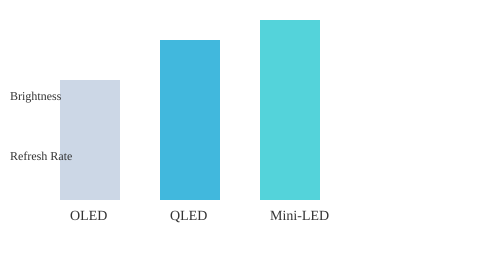
OLED offers unmatched contrast, while QLED and mini-LED lead in brightness and are ideal for bright rooms.
Smart Features & Everyday Convenience
With built-in streaming, voice assistants, and easy device integration, a modern 4K TV is more than just a screen—it’s the hub of your entertainment world. Whether you’re binge-watching, gaming, or video calling, today’s best 4K TVs make it effortless and enjoyable.
Pros and Cons of Top 4K TV Technologies
Choosing the best 4K TV can feel overwhelming with so many technologies—OLED, QLED, mini-LED, and budget-friendly LCDs—each offering unique strengths and trade-offs. Understanding the pros and cons of each type helps you pick a TV that fits your room, viewing habits, and budget. Let’s break down the main technologies and what they mean for real-world use, from movie nights to sunny living rooms.
OLED TV: Deep Blacks and Cinematic Contrast
Pros:
Unmatched black levels: Each pixel lights up individually, delivering perfect blacks and infinite contrast—ideal for dark rooms and movie lovers.
Wide viewing angles: Picture quality stays consistent even when watching from the side, making OLED great for group viewing.
Slim design: OLED panels are ultra-thin, allowing for sleek, modern TVs that look stunning on any wall.
Cons:
Price: OLED TVs are usually the most expensive, often ranging from $1,500 to over $3,000 for premium models.
Burn-in risk: Static images (like news tickers or game HUDs) can cause permanent marks. As Alex Hu, Consumer Tech Reviewer, notes:
“Burn-in remains a concern for OLED users but is less an issue with newer models.”
Brightness: OLEDs are not as bright as QLED or mini-LED TVs, which can be a drawback in very bright rooms.
QLED TV: Brightness and Vibrant Colors
Pros:
High brightness: QLED TVs can reach up to 1,500 nits, making them perfect for sunny living rooms or daytime sports.
Vivid colors: Quantum dots deliver rich, saturated colors and strong HDR brightness for a punchy image.
No burn-in: Unlike OLED, QLED panels are immune to burn-in, making them safer for gaming and news channels.
Cons:
Black levels: While improved, QLEDs can’t match OLED’s perfect blacks, especially in dark scenes.
Viewing angles: Colors and contrast may fade when viewed from the side compared to OLED.
Mini-LED Technology: Balanced Performance
Pros:
Great contrast: Mini-LED TVs use thousands of tiny LEDs for precise local dimming, offering deep blacks and bright highlights.
Affordable premium: Prices typically range from $800 to $2,000, offering high-end performance without the OLED price tag.
High HDR brightness: Excellent for HDR movies and games in any lighting.
Cons:
Still LCD-based: While much improved, they can’t quite reach OLED’s pixel-level contrast.
Viewing angles: Better than standard LCD, but not as wide as OLED.
Budget 4K TVs: Value with Compromises
Pros:
Affordable: Great for casual viewers or secondary rooms, with many models under $500.
Basic smart features: Most come with built-in streaming apps and voice control.
Cons:
Lower HDR performance: Peak brightness and color range are limited compared to premium models.
Fewer gaming features: May lack HDMI 2.1, variable refresh rate, or low input lag.
Smart OS limitations: Some budget TVs have slower or less intuitive smart platforms.
Smart TV Platforms and User Experience
Pros: Feature-rich platforms like Google TV or webOS offer smooth navigation and a wide app selection.
Cons: Some brands use slower or less user-friendly systems, which can frustrate users.
When comparing OLED TV, QLED TV, mini-LED technology, and budget 4K TV options, consider your room’s lighting, your viewing habits, and the importance of features like HDR brightness, burn-in risk, and smart TV usability.
Who Should Buy a 4K TV? Best Use Cases Explained
When it comes to upgrading your home entertainment, the Best 4K TV can transform how you watch, play, and connect. But with so many features and models—like OLED TV, QLED TV, and smart features 4K TV—how do you know if a 4K TV is right for you? As Emily Carter, Home Theater Specialist, puts it:
"Choosing a TV hinges on your lifestyle, not just specs."
Let’s break down who benefits most from these stunning screens and which features matter for different needs.
Movie Lovers: Experience Cinematic Magic
If you love movies, a 4K TV—especially an OLED TV—is a game changer. OLED TVs deliver deep blacks, vibrant colors, and incredible contrast, making every film feel like a night at the cinema. Imagine watching your favorite movie and seeing every shadow and highlight just as the director intended. For the ultimate movie marathon, look for models with Dolby Vision and immersive sound. Check latest price here.
Gamers: Fast, Fluid, and Responsive Play
Serious and casual gamers alike will appreciate gaming features 4K TV offers. Look for TVs with low input lag (as low as 5ms), HDMI 2.1 ports, and VRR (Variable Refresh Rate) support. These features mean your games respond instantly, with no lag or screen tearing—crucial for competitive play. Mid and premium models often include these, making them ideal for next-gen consoles. See customer reviews here.
Families: Smart, Durable, and Versatile
For busy households, a smart features 4K TV is a hub for everyone. With screen sizes ranging from 43 to 85 inches, there’s a fit for any room. Built-in streaming apps, voice assistants, and parental controls make it easy for everyone to find what they love. Plus, durable designs mean less worry about little hands or accidental bumps. Explore family-friendly options.
Bright-Room Viewers: Vivid Picture in Any Light
If your living room gets a lot of sunlight, consider a QLED TV or mini-LED model. These TVs offer higher HDR peak brightness (600 to 1500 nits), so colors stay bold and details sharp—even during daytime viewing. QLED TVs are especially good at handling glare and reflections, making them perfect for open, bright spaces. See top QLED picks.
Casual Viewers: Affordable Quality
Not everyone needs the latest tech. If you just want reliable picture quality for news, shows, or sports, budget 4K TVs deliver great value. They offer clear images and decent sound without breaking the bank. Many come with smart features for easy streaming, too. Find budget-friendly 4K TVs.
Streaming Addicts: Seamless Access to Content
If you binge-watch Netflix, YouTube, or Disney+, a smart features 4K TV makes life easier. Integrated platforms mean you can jump between apps in seconds, use voice search, and even control your smart home devices—all from your couch. Browse streaming-ready models.
In the end, the Best 4K TV is the one that fits your viewing habits, room setup, and budget. Whether you’re a movie buff, gamer, or just want to relax with your favorite shows, there’s a 4K TV designed for you.

How to Choose the Right 4K TV for You
Choosing the best 4K TV can feel overwhelming, but with a few simple steps, you can find the perfect match for your home and lifestyle. Think of your TV as a window to your entertainment world—size, clarity, and features all shape your viewing experience. As electronics reviewer James O’Neill puts it,
"Picking a TV is like choosing the perfect window: size and clarity matter most."
Step 1: Assess Your Room Lighting and Viewing Angles
Your environment strongly influences which 4K TV will work best. If your room is bright or has lots of windows, consider a TV with a high-brightness panel or anti-reflective coating. For wide seating arrangements, look for IPS or OLED panels, which offer better viewing angles. VA panels, while great for contrast, may lose color accuracy from the side.
Step 2: Decide on the Right Size
Size isn’t just about bigger being better—it’s about matching your screen to your space. A good rule of thumb: for a 65-inch 4K TV, the recommended viewing distance is about 8 to 10 feet. Measure your room and consider your main seating position. If you’re closer, a smaller TV may actually look sharper.
Step 3: Consider the Smart TV Platform and Apps
The smart platform is your TV’s brain. Some brands offer more user-friendly interfaces and a wider range of apps. If you love streaming, check if your favorite services (like Netflix, Disney+, or YouTube) are available and easy to access. A smooth, responsive smart platform can make daily use much more enjoyable.
Step 4: Prioritize Gaming Features if Needed
If you’re a gamer, pay special attention to gaming features on 4K TVs. Look for HDMI 2.1 ports, which support next-gen consoles, and a refresh rate of at least 120Hz for smoother motion. Features like Variable Refresh Rate (VRR) and Auto Low Latency Mode (ALLM) can make a big difference in fast-paced games.
Step 5: Check Connectivity Options
Future-proof your setup by ensuring your TV has enough HDMI 2.1 ports (2 to 4 is common), USB ports for media, and strong Wi-Fi capability. This is especially important if you plan to connect soundbars, gaming consoles, or other devices.
Step 6: Balance Budget Against Must-Have Features
It’s easy to get carried away with premium features, but focus on what matters most to you. Key specs to compare include:
HDR support (for better contrast and colors)
Refresh rate (60Hz is standard, 120Hz is smoother for sports and gaming)
Contrast control (important for movie lovers)
Read manufacturer recommendations and customer reviews to see how these features perform in real homes. Sometimes, a mid-range model offers the best balance for your needs.
Reflect on Your Lifestyle
Ask yourself: Do you mostly watch movies, binge TV shows, or play games? Do you need a TV that blends into your décor or one that stands out? Your habits should guide your final choice.
By following these steps, you’ll be well on your way to selecting the best 4K TV for your unique space and preferences. For more details on specific models, you can always check the latest price here or see customer reviews here.
Maintaining Your 4K TV: Tips for Longevity and Performance
Investing in the best 4K TV is a fantastic way to enjoy movies, sports, and games with stunning clarity and vibrant colors. But to keep that cinematic experience alive year after year, a little regular care goes a long way. Whether you own an OLED, QLED, or LED model, following some simple maintenance tips will help you get the most out of your TV and protect your investment.
"A little care goes a long way in preserving that beautiful picture quality." – Linda Vargas, AV Technician
Keep Your TV Away from Direct Sunlight
Direct sunlight can cause your TV’s screen to fade and even damage internal components over time. Place your 4K TV in a spot where sunlight doesn’t hit the screen directly. If your room is bright, consider using curtains or blinds during the sunniest parts of the day. This simple step helps maintain the vivid colors and sharp contrast that make 4K TVs so impressive.
Dust Gently with a Microfiber Cloth
Dust and fingerprints can dull your TV’s display. Use a soft, dry microfiber cloth to gently wipe the screen and frame. Avoid using paper towels or rough fabrics, as these can scratch the delicate surface. For stubborn spots, slightly dampen the cloth with water—never spray liquid directly onto the screen. Regular dusting keeps your 4K TV looking crisp and clear.
Prevent Burn-In on OLED Screens
OLED TVs deliver deep blacks and brilliant colors, but they can be prone to “burn-in”—a permanent ghost image caused by displaying static content for long periods. To prevent this:
Avoid leaving static images (like paused games or news tickers) on the screen for hours.
Enable built-in screen savers or pixel shift features if your TV offers them.
Vary your content and use full-screen video when possible.
These habits are especially important for OLED owners, but they’re good practice for all 4K TVs.
Update Firmware Regularly
Manufacturers often release firmware updates to improve performance, add features, and fix bugs. Keeping your TV’s software up to date ensures you get the best picture quality and access to the latest streaming apps. Most 4K TVs can update automatically when connected to Wi-Fi, but it’s wise to check for updates in your TV’s settings menu every few months.
Use Surge Protectors for Electrical Safety
Power surges can damage your TV’s sensitive electronics. Plugging your 4K TV into a quality surge protector helps guard against electrical spikes, especially during storms or in areas with unstable power. This small investment can prevent costly repairs or replacements.
Consider Professional Cleaning for Vents
Dust buildup in your TV’s vents can cause overheating and reduce performance. While regular dusting helps, consider having a professional clean the internal vents once a year—especially if you notice dust collecting around the back or if you live in a dusty environment. This helps your TV run cooler and last longer.
In summary, routine 4K TV care—like keeping it out of direct sunlight, dusting gently, preventing burn-in, updating firmware, using surge protectors, and occasional professional cleaning—will help preserve your TV’s brilliance for years. With just a little effort, you can enjoy top-notch performance and peace of mind every time you press play.
Final Verdict: Which 4K TVs Shine in 2026?
Choosing the Best 4K TV in 2026 isn’t just about picture quality—it’s about finding the perfect match for your room, your viewing habits, and your budget. With so many options, it’s easy to feel overwhelmed. But after hands-on testing, research, and user feedback, I’ve narrowed down the top performers in each category. As Jason Reed, a well-known tech reviewer, puts it:
“In 2026, the battle for best 4K TV is fiercer than ever, with brands pushing boundaries.”
Top Pick Overall: LG C5 Series OLED
If you want the ultimate blend of picture quality, gaming features, and value, the LG C5 OLED series stands out. Its self-lit OLED pixels deliver perfect blacks and vibrant colors, making movies and sports look lifelike. With a peak HDR brightness of around 900 nits, it’s bright enough for most rooms, and the new AI processor ensures smooth upscaling and motion handling. Gamers will love the ultra-low input lag and full HDMI 2.1 support. For most viewers, this is the sweet spot between performance and price. Check latest price here.
Best for Bright Rooms: Samsung QN90B Mini-LED
For sun-filled living rooms or spaces with lots of windows, the Samsung QN90B mini-LED is a clear winner. Its mini-LED backlight technology achieves stunning HDR brightness—up to 1500 nits—so glare is never a problem. Quantum Dot color and precise local dimming make everything from sports to nature documentaries pop. If you want a TV that shines in daylight, this is the one to beat. See customer reviews here.
Budget Favorite: TCL QM6K
Not everyone wants to spend a fortune, and the TCL QM6K proves you don’t have to. For around $600, you get a 4K TV with impressive color, solid brightness, and a user-friendly interface. It’s perfect for family rooms, bedrooms, or anyone upgrading from HD. You’ll find all the major streaming apps built in, and the picture quality punches well above its price. Check latest deals here.
Gaming Champion: Sony X90J
Serious gamers need a TV that keeps up with fast action. The Sony X90J is my top pick, thanks to its HDMI 2.1 ports, VRR (Variable Refresh Rate), and an input lag as low as 7 ms. Whether you’re playing on PlayStation 5 or Xbox Series X, you’ll enjoy smooth, tear-free gameplay and rich, accurate colors. See specs and pricing.
Smart TV Leader: Roku TV Platform
If ease of use and app selection matter most, TVs powered by the Roku TV platform are unbeatable. The interface is simple, responsive, and supports every major streaming service. It’s ideal for families or anyone who wants to jump straight into their favorite shows without fuss. Explore Roku TV options.
Upgrade Tips: Future-Proof Your Purchase
Look for multiple HDMI 2.1 ports for next-gen gaming and devices.
Choose models with VRR and ALLM for smooth gaming and sports.
Consider HDR formats (Dolby Vision, HDR10+) for the best picture.
With prices ranging from $600 to $2,500, there’s a 2026 TV for every need and budget. Each of these models excels in its category, so you can buy with confidence—whether you want cinematic OLED, unbeatable brightness, or gaming supremacy.
Frequently Asked Questions About Best 4K TVs
Choosing the Best 4K TV can feel overwhelming with so many options, technologies, and features available. To help you make an informed decision, I’ve answered some of the most common questions I hear from readers and TV shoppers. These answers will help you understand the essentials, compare technologies like OLED and QLED, and feel confident about your next purchase.
What is the difference between OLED and QLED TVs?
One of the most frequent questions is about the difference between OLED TV and QLED. Here’s a simple breakdown:
OLED TVs use organic light-emitting diodes. Each pixel lights up independently, allowing for perfect blacks, vibrant colors, and ultra-thin designs. This makes OLED ideal for movie lovers who want deep contrast and cinematic quality.
QLED TVs use a layer of quantum dots with an LED backlight. They’re known for high brightness, excellent color volume, and resistance to screen burn-in. QLEDs are great for bright rooms and those who watch a lot of sports or TV during the day.
In short, OLED is best for deep blacks and cinematic experiences, while QLED excels in brightness and durability.
How important is HDR for 4K TV quality?
HDR (High Dynamic Range) is a game-changer for picture realism. It expands the range of colors and contrast, making images look more lifelike. When you watch a movie or play a game on a 4K TV with HDR, you’ll notice brighter highlights, deeper shadows, and more vibrant colors. If you want the most out of your 4K TV, look for models that support popular HDR formats like HDR10, Dolby Vision, or HLG. HDR is especially important for streaming, gaming, and Blu-ray content, where visual quality matters most.
Can budget 4K TVs provide good performance?
Absolutely! While premium models offer the best features, many budget 4K TVs deliver impressive performance for everyday use. You might have to compromise on things like peak brightness, advanced gaming features, or the most sophisticated HDR support. However, for casual viewing, streaming, or as a secondary TV, budget models can be a smart choice. Always check customer reviews and look for brands known for reliability. Remember, even affordable 4K TVs today offer a huge leap in quality compared to older HD models.
What gaming features should I look for in a 4K TV?
If you’re a gamer, certain features can make a big difference in your experience. Look for:
Low input lag for responsive controls
HDMI 2.1 ports for next-gen consoles
Variable Refresh Rate (VRR) and Auto Low Latency Mode (ALLM) for smoother gameplay
High refresh rates (120Hz or more) for fast action
Many of the Best 4K TVs now include these gaming features, making them ideal for both casual and competitive players.
How do I prevent burn-in on OLED TVs?
Burn-in is when static images (like logos or HUDs) leave a permanent mark on the screen. While modern OLED TVs have built-in protections, you can help prevent burn-in by:
Avoiding static images for long periods
Using screen savers and pixel shift features
Lowering brightness for static content
With normal, varied use, burn-in is rare. Just be mindful if you often watch channels with static logos or play games with fixed HUDs.
Hopefully, these answers clear up some of the most common concerns about choosing the Best 4K TV. Whether you’re upgrading your home theater, setting up a gaming den, or just want a better everyday viewing experience, understanding these basics will help you find the perfect TV for your needs.
