
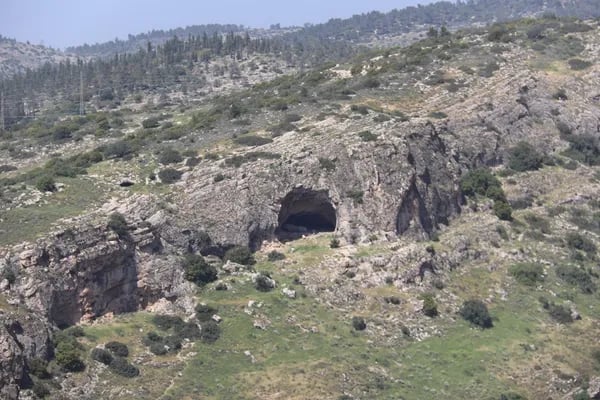

Far below the surface of the Caucasus Mountains lies Krubera Cave, a vast underground system that has redefined how scientists measure and understand the planet’s hidden landscapes. Known as the deepest explored cave in the world, Krubera extends for several kilometers beneath the Earth, revealing layers of geology shaped by water, pressure, and time. Exploration of this environment requires careful planning, advanced equipment, and international scientific collaboration, as conditions change dramatically with depth. What draws researchers to Krubera is not only its extreme scale, but also the valuable information it offers about subterranean ecosystems, groundwater movement, and long term geological processes. This story explores how Krubera was discovered, why it continues to attract scientific interest, and what its unique structure tells us about the powerful natural forces at work beneath our feet. By looking beyond the idea of adventure alone, this journey highlights the importance of deep cave research in expanding our understanding of Earth’s least visible and most fascinating environments.
The Call of the Abyss: Preparing for the Deepest Cave Descent
Standing at the entrance of Krubera Cave, the world’s deepest known cave, I felt a mixture of excitement and apprehension. We were about to embark on an 8-day journey into total darkness, venturing nearly 5 kilometers underground. The magnitude of this cave expedition was clear: we would be pushing beyond the previously measured depth of 2,199 meters, into zones that have remained uncharted for decades. This was not just a test of physical endurance, but a challenge to the mind and spirit—one that demanded a year of preparation and a willingness to accept the risks of extreme cave conditions.
Facing the Unknown: The Physical Toll of Krubera Cave
The physical demands of Krubera Cave are unlike any other. Over the course of the expedition, each member of our 11-person team expected to lose an average of 10 kilograms. This dramatic weight loss is not just a result of the strenuous activity—climbing, crawling, and rappelling for hours on end—but also the harsh subterranean environment. The cold, damp air, limited food supplies, and constant movement push the body to its limits. As I prepared my gear, I couldn’t help but recall the words echoing in my mind: “Curiosity brought me here, but it is too risky.”
Expedition duration: 8 days in total darkness
Distance covered: Approximately 5 kilometers underground
Average weight loss: 10 kg per participant
Team size: 11 members, split into two groups
Current known depth: 2,199 meters
Training for the Abyss: Physical and Mental Preparation
Preparing for a cave expedition of this scale is a year-long commitment. My training regimen included not only building strength and endurance but also learning specialized caving techniques. I practiced using equipment like the Jumar ascender and stop descender, essential for safely navigating the vertical shafts and steep drops of Krubera Cave. I drilled safety procedures until they became second nature, knowing that a single mistake could have fatal consequences.
But even more challenging was the mental preparation. Spending eight days in total darkness, cut off from the outside world, can take a psychological toll. The silence is absolute, broken only by the drip of water or the sound of your own breath. The sense of isolation is profound, and the knowledge that rescue is nearly impossible in an emergency weighs heavily on every decision. Before the expedition, each of us signed a contract acknowledging the risks. As I put pen to paper, the reality set in:
“I even signed a contract accepting that this expedition could literally cost me my life.”
Teamwork in Extreme Cave Conditions
Our team was composed of 11 experienced cavers, split into two groups for a coordinated descent. This setup allowed us to support each other, share the load, and ensure safety at every stage. Communication and trust were essential. We relied on each other not just for technical support, but for emotional strength during the most challenging moments. The goal was clear: to push beyond the known limits of Krubera Cave, mapping new passages and possibly discovering new life forms in the process.
Charting the Depths: Expedition Timeline vs. Depth Achieved
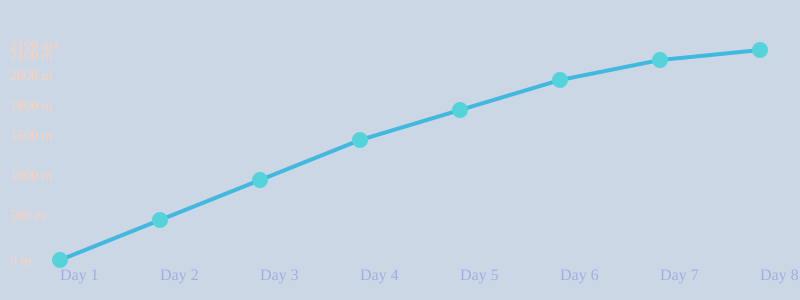
The journey into Krubera Cave is not just about reaching new depths. It is about preparation, resilience, and the willingness to face the unknown. As we secured our ropes and checked our gear one last time, the call of the abyss was impossible to ignore.
Navigating the Abyss: Challenges in Deep Exploration and Cave Geology
Descending into Krubera Cave is not just a journey downward—it’s a full immersion into one of the harshest and most unpredictable environments on Earth. Every step into the abyss brings new challenges, shaped by the cave’s unique geology and the extreme conditions that define deep speleological exploration.
Extreme Cave Conditions: Cold, Darkness, and Isolation
From the moment I removed my outer layers and prepared to descend, I could feel the chill settle in. The temperature inside Krubera hovers around 3°C, making it feel like you’re living inside a giant refrigerator. The cold is constant, seeping into your bones, and there’s no sunlight to warm you—just endless pitch darkness. Even with a headlamp, the blackness is overwhelming, and the sense of isolation is profound. In these depths, you’re truly alone with your thoughts and your equipment.
Physical Obstacles: Wells, Squeezes, and Siphons
Deep exploration in Krubera means facing a relentless series of physical barriers. The cave is a labyrinth of deep, slippery wells and tight squeezes that test both your body and your mind. Some passages are so narrow that you have to remove your helmet or gear just to fit through. I quickly learned that “These squeezes are very hard. They say, you don’t feel claustrophobia until you get stuck.” It’s only when you’re wedged between solid rock, unable to move forward or back, that the psychological pressure hits hardest.
One of the most intimidating features are the siphons—water-filled passages where there is no air. Navigating these requires specialized equipment and nerves of steel. The risk of getting trapped or running out of air is ever-present, and every move must be calculated. The cave’s meanders are sometimes so tight that previous explorers have had to widen them with tools, leaving marks on the walls as evidence of their struggle.
Geological Forces: The Making of Krubera
Understanding Krubera’s geology is key to appreciating the challenges of deep exploration. The cave is carved from massive limestone formations, shaped over millennia by the dissolution of rock through acidic groundwater. Tectonic activity has fractured and shifted these limestone layers, creating the vast network of passages, wells, and chambers that define the cave. This combination of limestone dissolution and tectonic movement has produced a landscape that is both beautiful and treacherous.
Constant Threats: Rock Falls and Sudden Floods
Every step in Krubera carries the risk of disaster. Loose rocks and unstable ceilings make rock falls a constant danger. Sudden floods, triggered by rainfall or snowmelt far above, can turn a safe passage into a deadly trap in moments. “One small mistake can kill you.” Even experienced speleologists have lost their lives here, and every member of the team is acutely aware that safety depends on vigilance and teamwork.
Rock falls: Unstable ceilings and loose debris can shift without warning.
Floods: Water levels can rise rapidly, blocking exits and filling passages.
Navigation errors: In the darkness, a wrong turn can lead to dead ends or dangerous drops.
Technical Demands: Ropes, Gear, and Endurance
Moving through Krubera is slow and exhausting. The average speed is just 100 meters per hour, whether ascending or descending. Every climber carries their own bag, packed with food, water, and survival gear. Ropes and hooks left by previous expeditions mark the route, but every descent and ascent is a test of skill. I made mistakes early on—forgetting to secure my stop descender, relying on the weaker Jumar device. In these moments, “When you’re on the rope, it’s just you and the rope. You’re all alone. Nobody can see the mistakes you could make and really help you.”
Psychological Hurdles: Claustrophobia and Fatigue
The psychological toll of deep cave exploration is immense. The darkness, cold, and isolation wear you down, but it’s the tight passages that truly test your resolve. Claustrophobia doesn’t hit until you’re physically stuck, unable to move. The fear is real, and it takes mental strength to stay calm and focused. Rest is essential—camps are spaced eight hours apart, giving the team a chance to recover before the next push deeper into the earth.
These squeezes are very hard. They say, you don’t feel claustrophobia until you get stuck.
One small mistake can kill you.
Exploring Krubera Cave is a battle against the elements, the rock, and your own limits. Every meter gained is hard-won, and the cave’s geology ensures that no two expeditions are ever the same.
Technological Advancements Empowering Speleological Exploration
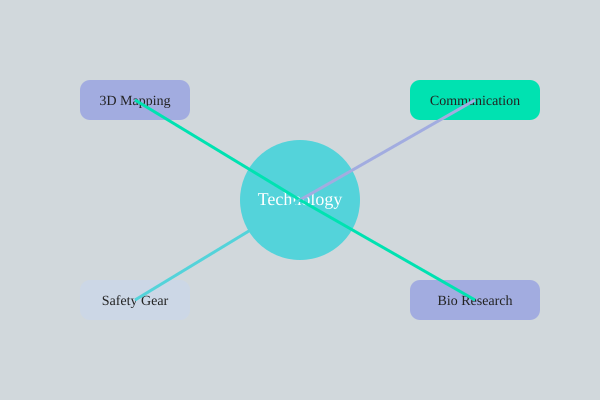
Exploring Krubera Cave, the world’s deepest cave, is a journey that pushes the boundaries of human endurance and ingenuity. Over the years, technological advancements have transformed speleological exploration, making it possible to map, communicate, and survive in the extreme underground environment. From advanced 3D mapping to specialized safety equipment and communication devices, technology has become an essential companion in our descent into the Earth’s depths.
Revolutionizing Cave Mapping with Nvidia Studio and GeForce RTX GPUs
One of the most significant breakthroughs in recent years is the creation of the first-ever detailed 3D map of Krubera Cave. As I reflect on our expedition, I remember the excitement when we first saw the digital rendering.
"With the help of Nvidia Studio and GeForce RTX GPUs, we've brought the first ever detailed 3D map of Krubera Cave to life."
This technology allowed us to visualize the cave’s complex passages, vertical shafts, and chambers before even setting foot inside. The 3D map not only provided a clear overview of the cave’s structure but also helped us plan our route, identify potential hazards, and locate the five main camps where we would rest during our descent.
The camps are strategically set up at intervals that are only eight hours apart, making it possible to move, then rest, in a predictable rhythm. This level of planning, powered by precise digital mapping, represents a leap forward in cave documentation and expedition safety.
Communication Devices: Lifelines in the Depths
Communication is crucial when exploring a cave as deep and remote as Krubera. To stay connected, we installed a 2,000-meter wire that enabled underground phone communication. This allowed us to coordinate between teams, share updates, and call for help if needed. Although the line was eventually damaged by floods, its presence marked a significant improvement in expedition safety and coordination.
Wireless communication devices and underground phone lines have become vital tools in modern speleological exploration. They help maintain contact between surface teams and those deep inside the cave, reducing the risks associated with isolation and miscommunication. In a place where every decision can mean the difference between life and death, reliable communication devices are indispensable.
Specialized Safety Equipment: Harnesses, Descenders, and Ascenders
Descending into Krubera Cave is not just about moving downwards; it’s about managing risk at every step. Specialized safety equipment is our first line of defense against the cave’s many dangers. Harnesses, stop descenders, Jumar ascenders, and ropes are essential for secure descent and ascent through vertical shafts.
I recall a moment early in the expedition when I made a critical mistake. In my confusion, I forgot to attach my stop descender and carelessly unlocked my most vital securing point. Suddenly, I was relying only on my Jumar ascender—the weakest link in my safety system.
"When you're on the rope, it's just you and the rope."
This experience was a stark reminder of the importance of proper equipment use and constant vigilance. Each securing point—usually three in total—serves as a backup, ensuring that even if one fails, the others can prevent a fall.
Monitoring Environmental Conditions and Overcoming Obstacles
Modern technology also enables us to monitor environmental conditions deep within the cave. Sensors track temperature, humidity, and air quality, providing early warnings of potential hazards like flooding or dangerous gas buildup. This data helps us adapt quickly to changing conditions and make informed decisions about when to move or set up camp.
Biological Research: Bait Traps and the Search for New Species
Krubera Cave is not just a geological wonder; it’s also a frontier for biological discovery. We placed bait traps at different depths to attract and capture new animal species adapted to total darkness. These traps are designed to reveal the hidden biodiversity of the cave, including transparent and eyeless creatures that have evolved in isolation. The integration of research tools into our exploration highlights how technology supports both safety and scientific discovery.
Mind Map: Technology Integration in Cave Expeditions

Subterranean Ecosystems and the Hunt for New Species
Exploring Krubera Cave is not just a geological journey—it is a biological expedition into one of the planet’s most mysterious subterranean ecosystems. Deep beneath the Earth’s surface, in total darkness, life has found extraordinary ways to adapt and survive. Our cave expeditions are driven by the hope of new species discovery, and every descent into Krubera brings us closer to understanding the hidden biodiversity that thrives here.
Life in Total Darkness: Evolutionary Marvels
Krubera Cave is home to creatures that have evolved over millions of years in absolute darkness. These animals are typically transparent or colorless, a direct result of their unique environment. As one of our team members observed during the expedition,
"These creatures are transparent, as they have evolved in total darkness."
Without sunlight, pigmentation becomes unnecessary, and eyesight often diminishes or disappears entirely. Instead, these organisms rely on other senses and adaptations to survive. The fish we spotted at a depth of over 2,000 meters was almost invisible, blending seamlessly into the black water. It was a reminder that Krubera’s depths may still hold many undiscovered forms of life.
Bait Traps: Tools for New Species Discovery
To study these elusive animals, we deploy bait traps at various depths throughout the cave. Each trap is carefully placed—sometimes on side walls, sometimes in small pools—always with the goal of minimizing disturbance to the fragile ecosystem. As we discussed during the expedition,
"We will try to discover a new animal species. That's why we bring bait traps."
At each research station, we set three traps, hoping to attract and capture small, lightless-adapted creatures. The traps are left in place for extended periods, allowing time for cave fauna to investigate. This method has proven effective in other subterranean environments and is essential for biological research in places where direct observation is nearly impossible.
Challenges of Biological Research in Extreme Environments
Collecting specimens in Krubera Cave is a delicate process. The environment is wet, slippery, and often dangerous. Equipment like descenders and ascenders must be used with extreme caution, especially on wet ropes. One misstep can be fatal, as the fast-moving water and narrow passages leave little room for error. Every movement is calculated, and every trap placement requires teamwork and precision.
Handling the captured animals is equally challenging. Many of these species are tiny and fragile, easily damaged by rough handling or changes in temperature and humidity. We take great care to ensure that specimens are preserved in their natural state for later analysis.
Scientific Collaboration and Species Identification
The hunt for new species in Krubera Cave is a collaborative effort. Our team works closely with academic institutions, including Crimean Federal University, to ensure that every specimen is properly identified and studied. After collection, samples are sent to university laboratories for detailed analysis, including genetic sequencing and morphological studies. This partnership is crucial for accurate taxonomy and for understanding the evolutionary relationships between cave-dwelling species.
In the 2024 expedition, we may have identified new species, thanks to the careful use of bait traps and the expertise of our scientific partners. Each discovery adds to our knowledge of subterranean ecosystems and highlights the importance of protecting these unique environments.
Expanding Our Understanding of Subterranean Biodiversity
The discovery of new species in Krubera Cave could significantly expand our understanding of subterranean biodiversity and evolutionary adaptation. Every fish, insect, or crustacean found here tells a story of survival in one of the most extreme habitats on Earth. The presence of transparent, lightless-adapted creatures hints at unexplored ecological niches and evolutionary pathways.
Species adaptations: Transparency, small size, loss of pigmentation, and reduced eyesight.
Bait trap counts: Three traps per research station, placed at different depths.
Scientific collaboration: Ongoing partnerships with universities for taxonomy and analysis.
Exploration in Krubera Cave is a frontier for biological research, offering a rare glimpse into the resilience and diversity of life beneath the Earth’s surface. Each new species discovered here not only enriches our scientific understanding but also reminds us of the complexity and fragility of subterranean ecosystems.
Human Stories from the Depths: Courage, Risk, and Resilience
Exploring Krubera Cave, the world’s deepest cave, is not just a test of technical skill—it is a journey that pushes every explorer to the edge of their physical and mental limits. The extreme cave conditions inside Krubera demand more than just expedition training; they require constant vigilance, quick thinking, and a deep well of resilience. Every descent into the cave is a story of courage, risk, and the human spirit’s determination to survive and discover.
Near-Misses and Life-Threatening Moments
From the very beginning of my descent, I realized how quickly things can go wrong. I remember starting to tangle myself almost immediately, confusion clouding my judgment. In a moment of carelessness, I forgot to put my stop descender on and unlocked my most vital securing point. Suddenly, I was relying only on my Jumar—the weakest point of security. I knew it would hold as long as I stayed upright, but if I squatted even a little too much, it could fail. The thought hit me hard:
"If I fall from here, I don't think I'm going to be alive."
Such near-misses are not rare in deep exploration. Each misstep can be fatal, and the margin for error is razor-thin. The cave’s unpredictable terrain and the constant risk of equipment failure mean that adaptation is not just helpful—it is essential. I had to remind myself, I need to adapt quickly if I want to make it out alive.
Physical Challenges: Tangled Ropes and Wet Equipment
The physical demands of cave expeditions are relentless. Moving through Krubera Cave means dealing with tangled ropes, slippery rocks, and soaking wet equipment. Every piece of gear is vital, and any mistake in handling it can have serious consequences. The average speed of movement is just 100 meters per hour, whether ascending or descending, and we always carry our heavy bags with us. Over the course of eight days underground, it’s common to lose up to 10 kilograms in weight. The temperature inside the cave hovers around 3 degrees Celsius, making it feel like living inside a giant fridge.
Rope management: Ropes can catch on sharp rocks or get tangled, slowing progress and increasing risk.
Wet and cold: Water drips from the ceiling and pools on the floor, soaking clothes and equipment, sapping energy and focus.
Heavy loads: Carrying all supplies—including food, water, and survival gear—adds to the strain.
Mental Solitude and Psychological Strain
Perhaps the most challenging aspect of deep cave exploration is the mental solitude. When you are alone on the rope, surrounded by darkness and silence, you feel truly isolated. As I hung suspended in the blackness, I realized,
"When you're on the rope, it's just you and the rope. You're all alone. Nobody can see the mistakes you could make and really help you."
The psychological strain of being cut off from the outside world, confined in tight spaces, and knowing that every decision could mean life or death, is immense. The darkness and silence amplify every doubt and fear. It takes mental endurance and resilience to keep moving forward, to trust your training, and to stay focused on each task.
Teamwork and Communication: Surviving the Hostile Environment
Despite the solitude, cave expeditions are never truly solo efforts. Communication and teamwork are crucial for surviving the hostile cave environment. Before each descent, we review our expedition training, check our equipment, and discuss strategies for navigating the cave’s hazards. Underground, we rely on each other for support, advice, and encouragement.
Pre-descent checks: Ensuring every team member is ready and all equipment is in order.
Problem-solving: Working together to solve technical difficulties, like ropes catching or equipment faltering.
Emotional support: Sharing fears and frustrations helps relieve psychological pressure.
Continuous Adaptation: Navigating the Unknown
Every moment in Krubera Cave is unpredictable. The terrain changes, equipment can fail, and new obstacles appear without warning. Continuous adaptation is the only way to survive and progress. The skills learned through intensive expedition training and the lessons from each challenge faced underground become the keys to resilience and success.
In the depths of Krubera Cave, every explorer’s story is marked by courage, risk, and the relentless drive to push beyond the limits—both of the cave and of themselves.
Future Expeditions and Scientific Potential of Krubera Cave
As I reflect on the journey into Krubera Cave, it is clear that this remarkable place is far from fully explored. The cave’s current explored depth stands at 2,199 meters, making it the deepest known cave on Earth. Yet, the possibility of reaching even greater depths remains. Each expedition uncovers new passages and challenges, suggesting that Krubera still holds secrets waiting to be revealed. As one explorer put it,
"Krubera continues. The descent is continuing."
This sense of ongoing discovery is at the heart of what makes future expeditions so exciting.
The potential for further depth measurements is one of the most compelling reasons for continued exploration. Over the past twenty years, teams have steadily pushed deeper, often using new routes such as “The Way to the Dream.” These efforts have shown that Krubera’s true depth may not yet be fully measured. With every descent, explorers map out new chambers and tunnels, each one offering a chance to break previous records and expand our understanding of the cave’s structure.
Technological advances are transforming the way we approach cave expeditions. In the early days, explorers relied on basic tools and sheer determination. Today, advanced mapping systems, improved communication devices, and specialized caving equipment make it possible to explore more safely and efficiently. For example, 3D mapping technology allows teams to create detailed models of the cave’s interior, while new rope and climbing systems help cavers navigate vertical shafts with greater security. These innovations not only make expeditions safer but also allow researchers to gather more precise data about the cave’s geology and hydrology.
The scientific potential of Krubera Cave is immense. Each new expedition brings the possibility of discovering unique geological formations, previously unknown species, and valuable insights into underground water systems. The cave’s isolated environment has already yielded new types of invertebrates, some of which are found nowhere else on Earth. Studying these organisms helps biologists understand how life can adapt to extreme conditions, offering clues about evolution and the limits of life on our planet.
Geologists are also fascinated by Krubera’s complex rock layers and underground rivers. By analyzing mineral deposits and water flow, scientists can learn more about the processes that shape our planet’s crust. Hydrologists study the cave’s water systems to better understand how underground rivers connect to surface ecosystems. These findings have applications beyond speleology, informing fields such as earthquake research, water resource management, and climate science.
Collaboration is a key factor in unlocking Krubera’s scientific potential. Speleologists work closely with universities, research institutes, and technology companies to plan and execute expeditions. These partnerships bring together experts from different disciplines, allowing for a more comprehensive approach to exploration and research. Long-term collaborations have already led to significant breakthroughs, and they promise to yield even more discoveries in the years ahead.
Looking to the future, I believe Krubera Cave will remain a focus of speleological research for decades to come. Its depth, complexity, and ongoing discoveries make it a unique natural laboratory. As technology continues to advance and global collaboration grows, the pace of exploration is likely to accelerate. Each new expedition not only pushes the boundaries of human achievement but also deepens our understanding of the natural world.
In conclusion, Krubera Cave stands as a testament to the spirit of exploration and scientific curiosity. The cave’s unexplored depths, combined with the promise of new discoveries, ensure that it will continue to inspire adventurers and researchers alike. As we look ahead, the words ring true:
"Krubera continues. The descent is continuing."
With every step deeper into the Earth, we move closer to unlocking the mysteries hidden beneath our feet, making Krubera Cave an enduring frontier for future expeditions and scientific discovery.
