
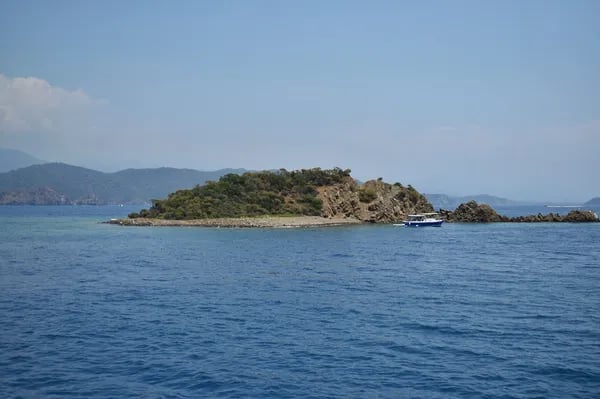



Imagine a place so small that in just a blink you can cross it end to end—yet home to nearly a thousand people squeezing together, living their entire lives intertwined. Santa Cruz del Islote isn’t just any island; it’s an astonishing microcosm of community, resilience, and paradox. Join me as I recount my journey to this densely packed artificial island in Colombia’s San Bernardo Archipelago, uncovering stories of survival, adaptations, and the indomitable spirit of its inhabitants.
Introduction to Santa Cruz del Islote: The Tiny Artificial Island
Tucked away in the turquoise waters of the Caribbean Sea, Santa Cruz del Islote stands as a remarkable testament to human adaptation and community. Located in the San Bernardo Archipelago of Colombia, near the islands of Tintipán and Múcura, this tiny artificial island is unlike any other place on Earth. With an area of just 12,140 square meters (0.012 km²)—about the size of a single football field—Santa Cruz del Islote is home to an estimated 800 to 1,200 residents. This makes it the most densely populated artificial island in the world, and one of the most crowded places anywhere.
When you first step onto Santa Cruz del Islote, the sense of closeness is immediate and intense. The island’s four main streets are always alive with activity. People seem to emerge from every corner, and it is nearly impossible to find a moment alone. The entire surface is built up with concrete, and there are no cars or motorcycles—there simply isn’t space for them. Life here is lived shoulder to shoulder, with every available meter used for homes, walkways, and communal spaces.
Origins: An Artificial Island Built by Fishermen
Santa Cruz del Islote is not a natural formation. In the 19th century, Afro-Colombian fishermen from the nearby coast began building the island on top of a coral platform. Using coral stones, shells, and later concrete, they gradually expanded the land to create a safe and permanent home for their families. Today, the island is part of the Corales del Rosario y San Bernardo National Park, and its unique history is reflected in the strong sense of community and shared culture among its residents.
Population Density: Crowded Beyond Imagination
The population density of Santa Cruz del Islote is staggering. With up to 1,200 people living on just over 12,000 square meters, the density reaches approximately 68,000 people per square kilometer. To put that in perspective, even the densest neighborhoods of Manhattan, New York, have a population density of around 27,000 people per square kilometer. Hong Kong, often cited as one of the world’s most crowded cities, has a density of about 6,700 people per square kilometer. On Santa Cruz del Islote, the density is nearly ten times that of Hong Kong, and more than double that of Manhattan. As one visitor put it:
"This is the most densely populated island on Earth."
This extreme crowding shapes every aspect of daily life. Many homes are shared by extended families, with up to ten people living in a single small room. There are about ten neighborhoods on the island, each with its own character, but all are closely packed together. Privacy is rare, and personal space is a luxury few can afford.
Life Without Space: Adaptation and Community
Living on Santa Cruz del Islote means adapting to constant proximity. The streets are narrow, and every patch of open space is used for something—children playing, adults socializing, or even someone doing their daily workout routine, sometimes just steps away from a neighbor’s front door or a stray dog. The lack of space has forced residents to develop a strong sense of cooperation and mutual respect.
Despite the crowded conditions, the island has a vibrant community spirit. There are no formal land titles, and houses are built without government permits, but everyone knows their neighbors and looks out for one another. There is no police presence on the island, yet crime rates are reported to be extremely low. Electricity is provided mainly by solar panels, and power is available only for a few hours each day, depending on the weather. The community relies on shared resources and collective problem-solving to manage daily challenges.
Infrastructure and Daily Life
- No cars or motorcycles: The island’s small size and dense construction make motor vehicles impossible. All movement is on foot.
- Four main streets: These narrow pathways connect the island’s ten neighborhoods and are always bustling with activity.
- Concrete construction: Nearly every surface is paved or built up, with homes, shops, and communal spaces packed tightly together.
- Solar power: Electricity is limited and shared, with most homes relying on solar panels for basic lighting and appliances.
- Strong community bonds: Shared history, culture, and daily challenges have created a resilient and close-knit society.
Santa Cruz del Islote is a fascinating example of how people can adapt to extreme conditions. Its unique blend of history, culture, and population density makes it a place like no other—a tiny artificial island where every inch counts, and community is everything.
Daily Life and Community Spirit on the Island
Living on Santa Cruz del Islote means adapting to a world where space is a rare luxury and community lifestyle is the foundation of daily existence. With a population density that defies logic, every corner of the island is alive with the sounds of people, roosters, waves, and music blending together. This constant hum of activity is the backdrop for a way of life shaped by both limitations and strong social bonds.
Living Quarters: Making the Most of Every Inch
Homes on the island are small and often built one on top of another, as limited land forces residents to expand vertically. Inside, it’s common for 10 people to share just three beds in a single room. Hallways double as laundry areas, and every bit of space—including the walls—is used for storage, since most families do not own wardrobes. Privacy is almost nonexistent, but the lack of personal space is offset by the warmth of communal living and shared values.
Electricity is scarce and unreliable, usually available only during the afternoon hours between 12 p.m. and 5 p.m., sourced mainly from solar panels. At night, homes are dark, and families often gather outside, using candles or phone flashlights to light their way. The absence of electricity encourages neighbors to come together, sharing stories and laughter under the open sky.
Family Structures and Social Dynamics
Typical family structures on Santa Cruz del Islote reflect Afro-Colombian traditions of free unions, where formal marriage is rare and relationships are often fluid. Many residents have children with multiple partners, and it is common for young people to start families early. Despite the unconventional arrangements, there is a strong sense of responsibility and interconnectedness among families.
With about 220 families living in homes built without formal permission, there is no official land ownership. Residents build wherever space allows, sometimes adding new rooms or floors atop existing structures. The buildings are so intertwined that it’s not unusual to walk through a neighbor’s home to reach another part of the island.
Community Lifestyle: Shared Challenges and Collective Solutions
The high population density could easily lead to conflict, but the community spirit on the island is remarkably strong. There is no police presence; instead, older adults act as informal mediators, resolving disputes and maintaining peace. As one resident put it:
"We live peacefully here. There is no crime because we all know each other."
This trust and familiarity are key to the island’s harmony. Children run freely up and down the narrow walkways, and neighbors keep a watchful eye on each other’s families. Even in the face of hardship—such as water shortages that make it difficult to keep kitchens clean or wash clothes—residents support one another, sharing resources and advice.
Economy and Daily Activities
Santa Cruz del Islote’s economy is rooted in the traditions of Afro-Colombian fishermen. Fishing is the main livelihood, with men and women heading out early each morning to bring back the day’s catch. Some residents supplement their income by selling food on street corners, working as barbers, or participating in small-scale tourism. Others try their luck with a lottery machine, dreaming of a better future.
Despite the crowded conditions, daily life is vibrant and dynamic. Chairs spill out of homes into the walkways, and it’s common to see people chatting, children playing, and dogs scavenging for leftovers. The community’s resilience is evident in the way they make use of every available resource and space.
Celebrations and Social Gatherings
Community events play a vital role in maintaining togetherness. Birthday parties, pub gatherings, and spontaneous celebrations fill the air with music and laughter, their sounds echoing across the entire island. These moments of joy provide comfort and relief from the challenges of daily life, reinforcing the bonds that hold the community together.
- Population density: About 10 people per room on average
- Electricity availability: Mainly 12 p.m. – 5 p.m. via solar panels
- Number of families in informal housing: 220
- No police presence: Peace is maintained through strong social ties
In Santa Cruz del Islote, the lack of personal space is compensated by a powerful sense of community spirit. The island’s unique social fabric is a testament to human adaptability, where collective wellbeing and shared traditions make life not only possible, but meaningful, even amidst extremes.
Survival Challenges: Water, Electricity, and Waste Management
Living on Santa Cruz del Islote, the most densely populated artificial island in the San Bernardo Archipelago, means navigating a daily reality shaped by water scarcity, unreliable solar panels electricity, and the ever-present threat of marine pollution. Every drop of water, every ray of sunlight, and every piece of waste is part of a delicate balance that determines our survival.
Water Scarcity: Every Drop Counts
There is no tap water on Santa Cruz del Islote. For us, water is more precious than gold. We depend almost entirely on rainwater collection, and not a single drop is wasted. The heart of our water system is a large community tank, known as the “lung of the island,” located below the health center. When rain finally comes—sometimes after 7 or 8 months of relentless drought—the entire community celebrates. As one resident shared, “When it rains, the joy is so immense here that we go partying that day.”
But drought is always lurking. The fear of running out of water is real and constant. We carefully store every bit of rainwater and distribute it equally among all families, making sure no one is left out. Still, the supply is never enough. The Colombian Navy recognizes our struggle and sometimes helps by allowing the mayor’s office to use their ships to bring water from the mainland. This assistance is a lifeline, but it is never guaranteed.
Solar Panels Electricity: Powering the Island, Sometimes
Electricity on Santa Cruz del Islote is a luxury, not a guarantee. Our island relies on 380 solar panels and 180 batteries to generate power. On sunny days, we have electricity from around noon to 5:00 p.m. But when the weather turns cloudy or rainy, the lights go out—sometimes for days. This makes it difficult to keep food fresh, run appliances, or even charge a phone. The unpredictability of solar power is a constant challenge, especially during the rainy season when the panels cannot generate enough energy.
The limitations of our solar system mean we must be careful with every watt. We have learned to live with less, but the lack of consistent electricity affects our health, education, and overall well-being.
Waste Management and Marine Pollution: A Growing Crisis
Waste disposal is one of the most pressing problems on the island. There is no formal garbage collection system, and no sewage infrastructure. As a result, much of our waste ends up in the surrounding Caribbean waters. As one resident put it,
“Without thinking twice, people just throw their loads of garbage into the water.”
This practice has led to severe marine pollution, threatening the very ecosystem that sustains us. Fish and other marine life are becoming scarce, forcing us to import more food from the mainland. The pollution also brings health risks, with mosquito infestations and waterborne diseases becoming more common. The lack of a sewage system means that when it rains heavily or during hurricane season, flooding mixes with waste, making streets and homes nearly uninhabitable.
Environmental Hazards: Flooding and Hurricanes
Rain is both a blessing and a curse. While it replenishes our water tanks, it also brings chaos. The expanded areas of the island are not solid, so heavy rains or hurricanes can make houses and streets unusable. During the rainy season, the tides rise, and seawater floods the narrow streets. One resident explained, “All these streets are flooded with sea water.” The flooding worsens living conditions, spreads waste, and increases the risk of disease.
Community Resourcefulness and Outside Help
Despite these challenges, the people of Santa Cruz del Islote show remarkable resilience. We have developed systems to share water, ration electricity, and cope with the lack of infrastructure. But the situation remains precarious. External support, like the Navy’s water deliveries, is essential. Sustainable solutions for water, solar panels electricity, and waste management are urgently needed to protect our health and the fragile marine environment of the San Bernardo Archipelago.
- No tap water: Rainwater collection is critical and celebrated as a communal event.
- Solar panels electricity: 380 panels and 180 batteries, but power is inconsistent and limited to a few hours on sunny days.
- Waste management: Most garbage is dumped into the sea, worsening marine pollution and food insecurity.
- No sewage system: Flooding and hurricanes make living conditions even more difficult.
- Navy assistance: Water deliveries from the mainland help, but are not a permanent solution.

Education and Economy: The Role of Tourism and Fishing
Living on Santa Cruz del Islote, part of the San Bernardo Archipelago, means adapting to unique challenges in both education and the economy. The island is famous for being the most densely populated artificial island in the world, but life here is shaped by limited resources and opportunities. The impact of tourism and the fishing economy is felt in every corner, while the educational system struggles to keep up with the needs of its young population.
Education on the Island: Limited but Vital
Education on Santa Cruz del Islote is centered around a single school, which serves as the only formal educational institution on the island. With 240 students and just 12 teachers, the school provides primary education to children not only from the island itself but also from neighboring islands. Since there are no schools on those nearby islands, students travel by boat each day to attend classes here. The sight of children arriving by boat is a daily reminder of how isolated yet interconnected life is in the San Bernardo Archipelago.
The school is a lifeline for the community, but its reach is limited. After finishing primary school, most children have no way to continue their education. There are no secondary schools or higher education facilities on the island. For many families, sending their children to the mainland for further studies is simply not possible due to financial constraints. As a result, the dreams of many young people are often put on hold. When asked about their aspirations, many children say they want to become soccer players, hoping to play for famous teams in Madrid, Paris, or Argentina. But without access to further education or training, these dreams are difficult to achieve.
Tourism Impact: A Double-Edged Sword
Tourism has become the backbone of the island’s economy. Every day, hundreds of tourists arrive, drawn by the island’s unique character and vibrant culture. Each visitor pays a $2.5 entrance fee, which directly supports the local economy. The influx of tourists brings both opportunities and challenges. On busy days, the narrow streets become crowded, and the small community must adapt to the sudden increase in people and activity.
"For us, tourists are a blessing from God."
This sentiment is shared by many locals, who see tourism as a vital source of employment. Jobs are created directly through services like bartending, guiding, and running small shops, as well as indirectly through increased demand for food, transportation, and entertainment. Income from tourism varies widely depending on the season. For example, a bartender can earn up to $50 per day during peak tourist periods, while a diver might make between $15 and $30, depending on the number of visitors and their luck with the day’s catch.
The Aquarium: Showcasing Local Marine Life
One of the main attractions for tourists is a small aquarium built by the locals. Here, visitors can see—and even swim with—fishes, sea turtles, and sharks kept in a limited space. This aquarium not only provides entertainment but also helps educate tourists about the region’s marine biodiversity. The entrance fees and related activities contribute significantly to the island’s income, making the aquarium an important part of the tourism impact on the local economy.
Fishing Economy: Tradition Under Threat
Fishing has always been a cornerstone of life on Santa Cruz del Islote. For generations, families have relied on the sea for their daily food and income. However, the fishing economy is now under serious threat. Overfishing and marine pollution have drastically reduced local fish stocks. Many fishermen report that they can no longer catch the same amount of fish as they once did. In fact, the situation has become so severe that the island now has to import fish from the mainland to meet local demand.
- Fishermen’s daily earnings: $15–$30, depending on luck and tourist presence
- Bartender’s daily earnings (peak season): up to $50
- Tourist entrance fee: $2.5 per person
This environmental degradation threatens the sustainability of both the fishing economy and the broader community. The delicate balance between economic needs and ecological health is becoming harder to maintain. As tourism grows, so does the pressure on local resources, making it even more important to find ways to protect the environment while supporting the livelihoods of those who call Santa Cruz del Islote home.
Cultural Dynamics and Lifestyle Nuances
Santa Cruz del Islote, often described as the world’s most densely populated artificial island, is home to a vibrant Afro-Colombian community. Here, the community lifestyle is shaped by spatial limitations, strong social bonds, and a set of cultural norms that prioritize communal living and social harmony over individual privacy. The island’s unique population density has led to flexible family structures and a way of life that is both resilient and deeply rooted in tradition.
Family Structures: Free Unions and Early Childbearing
Traditional marriage is rare on Santa Cruz del Islote. Instead, most couples live in free unions, forming families without formal ceremonies or legal recognition. Early childbearing is common, with girls typically having their first child around the age of 16. This pattern continues across generations, as there is little access to family planning and contraception. As a result, the population continues to grow, with families usually having between two and five children.
It is not unusual for individuals to have children with more than one partner, and this is widely accepted within the community. Parenting responsibilities are often shared, and the concept of family extends beyond the nuclear model. The laid-back attitude towards relationships and parenting reflects the island’s emphasis on acceptance and mutual support rather than strict social conventions.
"I have a husband, but I'm not married."
Despite the absence of formal marriages, these unions are stable and respected. The community’s approach to family life is relaxed, with little concern for personal space. Homes are small and crowded, but this is offset by the warmth and openness of daily interactions.
Communal Living and Mutual Support
On Santa Cruz del Islote, communal living is not just a necessity—it is a cherished way of life. With approximately 220 families living in close quarters, personal boundaries are minimal. Instead, residents rely on each other for support, sharing resources and responsibilities. The island’s spatial constraints have fostered a culture where cooperation and mutual aid are essential for survival.
Social harmony is maintained through respect for elders, who act as informal mediators in disputes. There is no police presence on the island; instead, older adults resolve conflicts and offer guidance, reinforcing the community’s values.
"We have 800 people here and we have no police. So, you don't see robberies, muggings, or stabbings. We live peacefully here."
In this tightly knit society, everyone knows each other, and social ties are strong. The absence of crime and the reliance on communal wisdom highlight the islanders’ commitment to maintaining peace and unity.
Recreation, Rituals, and Social Gatherings
Despite the challenges of limited space and resources, the island’s residents find joy in simple pleasures. Recreational activities such as soccer, dominoes, singing, and dancing are central to community life. The sound of Latin music fills the air, and impromptu gatherings are common, especially in the evenings when the weather cools and families spill out onto the narrow streets.
- Soccer is a favorite pastime for both boys and girls, with dreams of playing for international teams like Madrid or Paris.
- Dominoes is a beloved game, often played during lively social events.
- Birthday parties and other celebrations are important, bringing people together despite the cramped conditions.
These activities foster a sense of belonging and collective joy, reinforcing the island’s unique identity. Evenings are particularly vibrant, with residents gathering outside their homes, sharing stories, and enjoying each other’s company by candlelight or the glow of mobile phones.
Attachment to Place and Generational Continuity
Many residents have never left Santa Cruz del Islote, and a deep attachment to the island is a defining feature of the community. Life expectancy is remarkably high, with many living into their 80s and 90s, and some even surpassing 100 years. The island has no cemetery; instead, when someone passes away, their body is transported to the mainland for burial, underscoring the spatial constraints and the importance of ritual in marking life’s milestones.
"I'm going to die right here. I was born and raised here."
This sense of belonging is passed down through generations, as children grow up surrounded by extended family and neighbors who play an active role in their upbringing. Despite the hardships—such as unreliable electricity, limited fresh water, and environmental challenges—the people of Santa Cruz del Islote cherish their unique identity and the bonds that hold their community together.
Environmental and Future Challenges Facing Santa Cruz del Islote
Living on Santa Cruz del Islote, I am constantly reminded of both the beauty and the fragility of our home. Our island, nestled in the heart of the San Bernardo Archipelago, is famous for its vibrant community spirit and our deep connection to the sea. Yet, beneath the surface of daily life, we face serious environmental challenges that threaten our way of life and the future of the island.
Scarcity of Land and Vertical Expansion
Santa Cruz del Islote is incredibly small, covering just about 12,140 square meters. With a population density of nearly 68,000 people per square kilometer, space is our most precious and limited resource. The lack of available land means that when families grow, we have no choice but to build upwards, stacking new rooms and homes on top of existing structures. While this vertical expansion allows us to stay together as a community, it also puts extra pressure on our already strained infrastructure and increases the risk of accidents or structural problems.
Sanitation Struggles and the Absence of a Sewage System
One of the most pressing environmental challenges we face is the lack of a proper sewage system. During the rainy season, and especially when hurricanes pass nearby, our low-lying geography means that heavy rains quickly flood the narrow streets and even our homes. Without adequate drainage, waste and dirty water accumulate, creating serious health risks and making daily life even more difficult. The absence of a sewage system also means that much of our waste ends up in the surrounding sea, contributing to marine pollution and threatening the delicate balance of the local ecosystem.
Marine Pollution and Food Security
Marine pollution is a growing concern for everyone on Santa Cruz del Islote. With limited options for garbage disposal, much of our waste, including plastics and organic matter, is dumped into the ocean. This not only harms the marine environment but also affects our main source of food. Overfishing and pollution have reduced fish stocks around the island, forcing many of us to rely on the mainland for seafood and other essentials. The health of the sea is directly tied to our own well-being, and we are painfully aware of the damage being done.
Precarious Infrastructure and Water Scarcity
Our dependence on limited infrastructure, such as solar panels for electricity, leaves us vulnerable to power outages and equipment failures. Clean water is another constant worry. Droughts can last seven to eight months, and there is no natural freshwater source on the island. We rely on rainwater collection and shipments from the mainland, but these are often insufficient. The lack of clean water affects every aspect of life, from cooking and cleaning to personal hygiene and health.
Population Growth and Density Pressures
Despite these challenges, our population continues to grow. Family planning is not widely practiced, and with each new generation, the pressure on our limited space and resources increases. As one resident put it,
"The island is not in a position to accommodate more people."This reality is becoming harder to ignore, as overcrowding leads to more waste, higher demand for water and electricity, and greater strain on our fragile environment.
Tourism: Economic Lifeline and Environmental Threat
Tourism has become an important part of our economy, bringing hundreds of visitors to the island each day. While this helps support local families, it also adds to the waste and congestion problems we already face. Without careful regulation and investment in sustainable infrastructure, the growth of tourism could push our environment past its breaking point. Balancing the benefits of tourism with the need to protect our home is one of the biggest challenges we face moving forward.
Conclusion: A Delicate Balance for the Future
Santa Cruz del Islote is a place of resilience, shared happiness, and strong community bonds. But our future depends on how we address the environmental challenges that come with extreme population density and limited resources. Without significant changes—especially in waste management, water supply, and sustainable tourism—our delicate ecosystem and overcrowded infrastructure could deteriorate further. The choices we make now will determine whether our island can continue to thrive or whether we risk losing the unique way of life that makes Santa Cruz del Islote so special. As we look ahead, it is clear that balancing growth, environmental preservation, and community well-being is not just important—it is essential for our survival.
