

In rural Uganda, the life of Mariam Nabatanzi has drawn global attention for the remarkable size of her family and the social and medical circumstances that shaped her journey. Often referred to in international media as “Mama Uganda,” her story extends far beyond statistics, offering a deeper look into issues such as early marriage, access to healthcare, economic hardship, and the resilience required to raise a large household under challenging conditions. Medical specialists have also studied her case to better understand the rare biological factors that contributed to her unusually frequent multiple births, highlighting the intersection of health science and social reality. This story explores the broader context of Mariam Nabatanzi’s life—her daily responsibilities, the support systems that sustain her family, and the cultural and economic environments that influence her experience. By focusing on context, dignity, and long-term perspective, it provides international readers with a more thoughtful understanding of a life that has often been reduced to headlines, yet carries important lessons about resilience, community, and human endurance.
The Unbelievable Fertility of Mariam Nabatanzi and Medical Insights
When people hear about my life, the first thing they ask is how I managed to give birth to 44 children. It is a number that surprises everyone, even myself. My story is not just about having a big family, but about a rare medical condition that shaped my entire journey as a mother. I have lived through experiences that most people can hardly imagine, and my fertility has been both a blessing and a challenge.
Birthing 44 Children: A World Record and a Medical Mystery
I gave birth to 44 children, which is believed to be a world record. My family includes many sets of multiples: four sets of twins, five sets of triplets, and five sets of quadruplets. In total, I had 15 multiple births. This is not something that happens by chance. There is a medical explanation behind my extraordinary fertility, and it has been a journey filled with both joy and hardship.
Total children: 44
Multiple births: 15
Twins: 4 sets
Triplets: 5 sets
Quadruplets: 5 sets
Understanding Hyper Ovulation: The Rare Genetic Condition
Doctors explained to me that my fertility is linked to a rare genetic condition called hyper ovulation. This condition causes my body to release multiple eggs during each ovulation cycle, instead of just one. As Dr. Charles Kiggundu, a medical expert who has discussed my case, said:
"My ovulation was very high, sometimes releasing multiple eggs."
Because of hyper ovulation, my chances of having twins, triplets, or even quadruplets were much higher than most women. This is why I had so many multiple births. The condition is extremely rare and is medically documented as such. In most families, having one or two sets of twins is already unusual, but in my case, it became a regular part of my life.
What Is Hyper Ovulation?
Definition: A rare genetic condition where a woman releases more than one egg per menstrual cycle.
Result: Increases the likelihood of multiple births (twins, triplets, quadruplets).
Prevalence: Extremely rare worldwide.
Medical Advice and Paradoxical Protocols
After giving birth to 18 children by the age of 19, I became concerned about my health and went to the hospital to seek help. I wanted to stop having more children, but the advice I received was surprising and confusing. The doctors told me that my ovaries contained many eggs, and that the only way to reduce the number of eggs was to continue getting pregnant. They warned me that if I stopped, I could develop life-threatening tumors. As I recall:
"They told me that if I didn’t get pregnant, I could develop a tumor."
This advice was difficult to understand. I was told that my fertility was so high that my body needed to keep releasing eggs, or else the eggs could form tumors. The doctors said that the best way to protect my health was to continue having children. This paradoxical medical protocol meant that, for years, I kept giving birth, not just because of tradition or family expectations, but because of medical advice.
Medical Protocols and Misconceptions
Doctors sometimes recommend continued pregnancies in rare cases of hyper ovulation to prevent ovarian complications.
There is a common misconception that high fertility is always a blessing, but it can also be a serious health risk.
Medical protocols for rare conditions like mine are not always straightforward and can be confusing for patients.
The Turning Point: Tubal Ligation Procedure
Eventually, after many years and many children, I reached a point where I could not continue. My health and the well-being of my family were at risk. The doctors finally agreed to perform a tubal ligation procedure, which is a surgical operation to block or cut the fallopian tubes, preventing any more pregnancies. This was a relief for me, as it meant I could focus on raising the children I already had without worrying about more pregnancies.
What is Tubal Ligation?
Definition: A permanent surgical procedure to prevent pregnancy by blocking the fallopian tubes.
Purpose: Used as a last resort for women with high-risk fertility or health complications.
Result: Stops further pregnancies, allowing women to manage their health and family size.
Medical Insights: Blessing and Risk
My fertility has always been seen as both a blessing and a challenge. While I am grateful for my children, my rare genetic condition brought many health risks and emotional struggles. The medical community has documented my case as one of the most unique in the world. Doctors like Dr. Charles Kiggundu have studied my condition to better understand hyper ovulation and its effects.
There are many misconceptions about women like me. Some people think that having many children is always a choice, but in my case, it was a result of a rare medical condition and the advice I received from doctors. My story shows how important it is for women to have access to clear, accurate medical information and support, especially when dealing with rare health conditions.
The Hardship of Forced Marriage and Early Life
My story begins with loss. When I was only three days old, my mother left us. I grew up without her love or care, and this absence shaped my entire childhood. My father was often away, and when he was gone, my stepmother became the main adult in our home. She was not kind. In fact, she was cruel in ways that are hard to imagine.
I remember how she would leave broken glass in our food, hoping to harm my brothers.
“My stepmother left broken glass to harm my brothers.” — Mariam Nabatanzi
One by one, my siblings died because of her actions. I was powerless to stop her. The pain of losing my brothers and sisters at such a young age is something that has never left me. It was a brutal introduction to the world, and it taught me early on that life could be very harsh.
Sold Into Marriage at Age 12
When I was just 12 years old, my father made a decision that would change my life forever. He sold me to a man much older than me.
“I was sold to a man older than me.” — Mariam Nabatanzi
In some rural areas of Uganda, being forced into marriage at such a young age is not uncommon. For me, it was the beginning of a new chapter of hardship. I did not have a choice. My father told me to go, and I had no power to refuse.
The man I was sold to became my husband. He was not a kind man, and there was no love in our marriage. He already had five wives before me, and I was the sixth. Our home was filled with tension, jealousy, and frequent arguments. I often tried to run away, but my father always forced me to return. He said he could not pay back the bride price, so I had to stay, no matter how unhappy or unsafe I felt.
Living in an Abusive Marriage
My marriage was not just loveless; it was abusive. There was constant fighting, and I was often mistreated. My husband’s other wives did not make things easier. The house was crowded, and there was always competition for his attention and resources. I felt alone, even though I was surrounded by people. The lack of support from my family made things worse. My father only cared about the bride price, and my mother was not there to help me.
Being sold into marriage in Uganda is a reality for many girls, especially in rural areas. Early forced marriage shaped my life’s path and took away my childhood. I was expected to become a wife and mother before I was ready, and I had to learn to survive in a hostile environment.
Early Motherhood: Triplets at Nineteen
Despite the pain and hardship, life continued. When I was 19 years old, I gave birth for the first time. I had triplets—one girl and two boys. This was the start of my long journey as a mother. Over the years, I gave birth a total of 15 times. Four times I had twins, five times I had triplets, and five times I had quadruplets. My body and mind were pushed to their limits, but I did not have a choice. Early motherhood in Uganda is often the result of forced marriage, and I was no exception.
Raising so many children was not easy. I had to find ways to feed them, clothe them, and keep them safe, all while dealing with an abusive husband and little support from anyone else. My commitment to my children kept me going. I wanted to give them the love and care that I never received as a child.
Family Tragedies and Betrayals
My early family life was filled with tragedy and betrayal. My stepmother killed my siblings, and I lost six of my own children as well. Some died from illness—heart disease and malaria took several of them. Others died under mysterious or tragic circumstances. Once, I let my sister take care of two of my children for a few days. Everything seemed fine at first, but then she called to tell me that both of them had died. I was too poor to seek justice or take any legal action against her. The pain of losing my children was almost unbearable.
People sometimes ask how I survived all of this. The truth is, I had no choice. I had to be strong for my children. I had to find a way to keep going, even when I felt completely alone. My resilience was tested again and again, but I refused to give up.
Resilience in the Face of Hardship
Despite everything, I remained committed to my children and their survival. I did not have the support of my parents or my husband, but I did everything I could to protect and provide for my family. The hardship of being sold into marriage, living in an abusive marriage, and facing so many family tragedies could have broken me. Instead, it made me stronger.
Forced into marriage Uganda: My story is one of many in rural Uganda, where girls are often sold into marriage at a young age.
Sold into marriage: I was sold at 12, forced to become a wife and mother before I was ready.
Abusive marriage: My marriage was filled with pain, abuse, and neglect.
Early motherhood Uganda: I became a mother at 19, starting with triplets and raising a large family against all odds.
These experiences shaped who I am. My early life was marked by forced marriage, abuse, and loss, but also by a fierce determination to survive and care for my children, no matter what.

Life with 44 Children: Living Conditions and Daily Survival
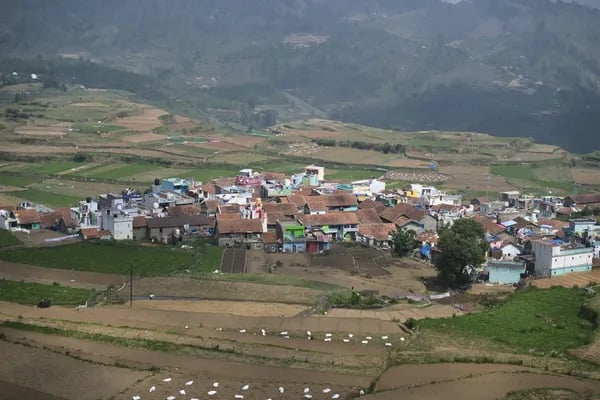
When people hear that I am the mother of 44 children, they often ask, “How do you live?” My life is not easy, but I do my best every day to keep my family together and safe. Our home is in a small village about 50 kilometers north of Kampala, Uganda’s busy capital. Here, in the coffee fields and red earth, we have built a life that is both challenging and full of love.
Our Home: Four Small Houses, Many Lives
We do not live in one big house. Instead, our family is spread across a modest compound of four small brick houses, each with a corrugated iron roof. These houses are simple and crowded. There is no extra space for playrooms or private bedrooms. Most nights, seven or eight children sleep together in a single room. As I often say,
“We sleep together, sometimes 7-8 children in one room.”
Not all my children live under my roof now. Some of the older ones have grown up and started their own small families nearby. But most of my children are still with me, and our compound is always full of laughter, noise, and movement. The living conditions in Uganda, especially for large families like mine, are tough. There is not enough space, and privacy is rare. Still, we make do with what we have.
Daily Survival: Feeding a Village
Feeding 44 children is a task that never ends. Every day, I cook about 25 kilograms of cornmeal to make posho, a staple food here. Sometimes, I add beans or vegetables if I can afford them. The children help with peeling, chopping, and stirring. We eat together, sitting on the floor or outside in the shade. There are days when food is scarce, and everyone must share what little we have. There have been times when we had nothing to eat, and the children cried from hunger. I remember waiting and praying, hoping that God would help us through another day.
I work day and night to make sure they don’t go hungry.
“I work day and night to make sure they don’t go hungry.”
To survive, I have learned to do many jobs. I sell herbal medicine in the village, using knowledge passed down from my ancestors. I also work as a tailor, sew clothes, style hair, and even brew local gin when I need extra money. Sometimes, I collect scrap metal or firewood to sell. The economic hardship is real, but I never stop trying.
Children as Helpers: Chores and Caregiving
With so many children, everyone must help. The older ones look after the younger ones, making sure they are safe and fed. The girls help me with cooking and cleaning, while the boys fetch water, collect firewood, and help in the garden. It is not always easy for them. Sometimes, I see the tiredness in their eyes. But we are a team, and we support each other as best as we can.
Education: A Constant Challenge
One of the biggest family survival challenges is education. In Uganda, school fees, uniforms, and books are expensive. With so many children, I cannot afford to send them all to school at the same time. Some go for a few years, then stay home when we run out of money. Others help me with work instead of studying. I want them all to have a better future, but the reality of poverty and limited infrastructure in rural Uganda makes this very hard.
Loss and Resilience: Stories of Survival
Our family has faced many tragedies. Six of my children have died—some from illness like malaria and heart disease, others in ways that still break my heart. I have also lost siblings to violence and neglect. My own childhood was full of pain: my mother left when I was three days old, and my stepmother killed my brothers. At age 12, my father sold me to an older man, who became the father of my children. There was no love in that marriage, only hardship and abuse. My husband had six wives and often brought other women into our home, making me cook and wash for them. One day, he sold our house and disappeared, leaving me and the children with nothing.
After he left, I was pregnant with my last child. I took my children and walked for days, sometimes sleeping by the roadside, until we reached my grandmother’s house. We started over with nothing. Even then, I thought about giving up. But I could not leave my children. “Who would care for them?” I asked myself. So I stayed, and we survived together.
Life in the Coffee Fields Village
Our village is surrounded by coffee fields, and many families here struggle with poverty. The living conditions in Uganda for large families are especially hard. We have no running water or electricity. We fetch water from a well and cook over open fires. The children play outside when they can, but there is little time for games. Most of our energy goes into surviving each day.
Living with Hope
Despite everything, we find moments of joy. We sing, we tell stories, and we celebrate small victories. My children are my strength. They remind me every day that even in the hardest times, there is hope. Our life is not easy, but it is ours. We face each day together, as a family, in our small homes north of Kampala.
Education and Aspirations: Mariam’s Hopes for Her Children’s Future
Growing up in Uganda, I never had the chance to go to school. My life was shaped by hardship and early marriage, and I often think about how different things might have been if I had received an education. That is why, above all else, I want my children to have opportunities I never had. Education is not just a dream for me—it is the key to breaking the cycle of poverty and abandonment that has followed my family for generations. As I often say, “I want my children to become doctors and lawyers.”
My Own Struggles and the Value of Education
I am not an educated woman. I learned early on that without education, life is much harder, especially for women in Uganda. I have faced many challenges as a single mother, raising a large family almost entirely on my own. These experiences have only strengthened my resolve to give my children a better future through education. I believe that if my children can stay in school and finish their studies, they will have the chance to build stable, meaningful lives and help lift our family out of poverty.
Children’s Education in Uganda: Facing School Fees and Survival Challenges
In Uganda, sending children to school is not easy, especially for families like mine. School fees are a constant worry. Sometimes, even when my children are eager to learn, we simply cannot afford the costs. This has forced some of my children to drop out of university or take up jobs before finishing their education. The struggle to balance family survival challenges with the dream of education is something I live with every day.
School fees often prevent children from attending or completing their studies.
Some children have had to work to support the family instead of staying in school.
COVID-19 and other crises have interrupted schooling, making it even harder to keep children on track.
My Children’s Diverse Career Paths and Aspirations
Despite these difficulties, I am proud that my children have pursued different career paths, each with their own dreams and ambitions. Their journeys show the importance of education in Uganda and how it can open doors, even when the road is not easy.
Nursing: My eldest daughter became a nurse. She worked hard, finished her studies, and found a job at Mulago Hospital. Unfortunately, after she met someone and moved to Russia, I lost contact with her. She has not supported me or the family since then, but I am still proud of her achievements.
Mechanical Engineering: My second son studied mechanical engineering. He worked hard and completed his degree, but due to a lack of money and opportunities, he is now working as a car mechanic in the city. Even though he could not find a job in his field, his education has given him skills that help him support himself and the family.
Tourism: Another son started studying tourism at university. He was passionate about learning and wanted to build a career in Uganda’s growing tourism industry. But again, school fees became too much for us to manage, and he had to leave his studies unfinished.
These stories are just a few examples of the challenges we face. Still, I encourage all my children to keep learning and to never give up on their dreams.
Teaching Skills at Home: Adapting During School Closures
When the COVID-19 pandemic hit, schools across Uganda closed for months. Many children lost valuable time and some even experienced unexpected pregnancies during the quarantine. I knew I could not let my children’s education stop just because the schools were closed. So, I took matters into my own hands.
I started teaching my daughters practical skills at home. Instead of letting them wander around the house with nothing to do, I taught them hairstyling and hairdressing. My sons learned computer skills, which I believe will help them in the future job market. These home lessons kept my children busy and gave them valuable skills they can use to earn a living, even if they cannot finish formal schooling right away.
“I want my children to become doctors and lawyers.” — Mariam Nabatanzi
Education Aspirations: Hope for a Better Future
My biggest hope is that my children will have choices in life. I want them to be able to choose their own paths, whether that means becoming doctors, lawyers, engineers, or business owners. I believe that education is the only way to give them this freedom. I do not want them to experience the same hardships I did, or to be forced into early marriage or difficult jobs because they have no other options.
Even as I dream for my children, I also dream for myself. If I could go back, I would not marry young. I hope to remarry one day and continue rebuilding my life. I want my children to see that it is possible to overcome hardship and to keep moving forward, no matter what life brings.
“If I could go back, I would not marry young.” — Mariam Nabatanzi
Through all the challenges—school fees, family survival, and the uncertainty of life—I remain committed to my children’s education. Their success is my greatest hope and my strongest motivation. I will do whatever I can to help them achieve their dreams, because I know that education is the key to a better future for all of us.
Cultural Context and Broader Social Issues Reflected in Mariam's Story
Mariam Nabatanzi’s life is not just a story of personal struggle and resilience; it is a lens through which we can better understand the cultural context and broader social issues facing many women and families in Uganda today. Her experiences reflect deep-rooted traditions, ongoing challenges, and the complex realities of rural Ugandan society. As I listened to Mariam share her journey, I realized that her story is both unique and emblematic of wider patterns—especially regarding forced into marriage Uganda, child marriage statistics Uganda, social stigma Uganda, and polygamous marriages Uganda.
Early child marriage and the forced sale of girls remain critical social issues in Uganda, particularly in rural areas. Mariam herself was forced into marriage at a very young age, a fate that is unfortunately still common for many girls in her country. According to UNICEF, there are currently around 5 million underage married girls in Uganda. This staggering number highlights the scale of the problem and the urgent need for change. In some rural communities, girls are still exchanged for livestock, a practice that treats them as property rather than individuals with rights and dreams. Mariam’s story brings these statistics to life, showing the human cost behind the numbers.
When Mariam told me, “I was abandoned by society but proud of my children,” her words captured the pain of social exclusion that often follows women in her situation. After being forced into marriage and becoming the fifth wife of her husband, she was eventually cast out—both from her home and from her community. This kind of social stigma Uganda is not uncommon, especially for women who have large families or who are seen as breaking with traditional norms. In Mariam’s case, her extraordinary number of children made her a target for gossip and judgment. She was left to raise her family alone, with little support from those around her.
Polygamous marriages Uganda are another important part of this context. Mariam’s former husband had multiple wives and, by her estimate, at least sixty children. Polygamy is still practiced in many parts of Uganda, and it often leads to complicated family dynamics and increased vulnerability for women and children. In these marriages, women may have little say in their own lives or in the upbringing of their children. Abuse and neglect are not uncommon, and the burden of care typically falls on the mothers. Mariam’s experience is a powerful example of how these traditions can shape—and sometimes limit—the lives of women.
Despite these hardships, Mariam has shown remarkable strength and resilience. She has managed to keep her family together, even as she faced abandonment and social isolation. What stands out most to me is her commitment to her children’s future. When I asked her if she had ever considered marrying off her older daughters, she replied that education comes first. This is a significant stance in a society where early marriage is often seen as the only option for girls. Mariam’s determination to prioritize education over tradition is a hopeful sign that change is possible, even in the face of overwhelming odds.
Her family is also a testament to Uganda’s cultural and religious diversity. Among her children are both Muslims and Christians, reflecting the varied backgrounds that make up Ugandan society. This diversity is a source of strength for Mariam, and it shows that even in difficult circumstances, families can find ways to honor different beliefs and traditions. It is a reminder that Uganda is not defined solely by its challenges, but also by its capacity for inclusion and adaptation.
The broader social issues reflected in Mariam’s story are not unique to her. Across Uganda, millions of girls are still at risk of early marriage, forced sales, and social exclusion. The practice of exchanging girls for livestock persists in some rural areas, perpetuating cycles of poverty and disempowerment. Women who have large families or who leave polygamous marriages often face intense stigma and isolation. These challenges are compounded by limited access to education, healthcare, and economic opportunities.
Yet, Mariam’s story also offers hope. Despite everything she has endured, she remains full of life and love for her children. As one observer noted, “Tragedy has not killed the childlike spirit inside her.” Her ability to maintain her dignity and optimism in the face of adversity is inspiring. She is proud of her children and looks forward to the day when they will become productive members of society. Her resilience is a testament to the strength of Ugandan women and the potential for change, even in the most difficult circumstances.
In conclusion, Mariam Nabatanzi’s life is a window into the larger social dynamics of Uganda. Her experiences highlight the urgent need to address forced into marriage Uganda, improve child marriage statistics Uganda, challenge social stigma Uganda, and rethink the role of polygamous marriages Uganda. At the same time, her story reminds us of the power of hope, education, and family. As Uganda continues to grapple with these issues, the voices and experiences of women like Mariam will be essential in shaping a more just and inclusive future.
