


I still remember the day I swapped my old filter for a Medify MA-50 replacement: the room smelled cleaner within hours and even my sneezing fit seemed shorter. In this post I walk you through what makes Medify replacement filters different, which models fit which needs, and how to balance cost with performance—based on specs, user feedback, and a few real-life tests I ran at home.
1) The 3-in-1 Filtration — How Medify Cleans the Air (Three Layers, True HEPA)
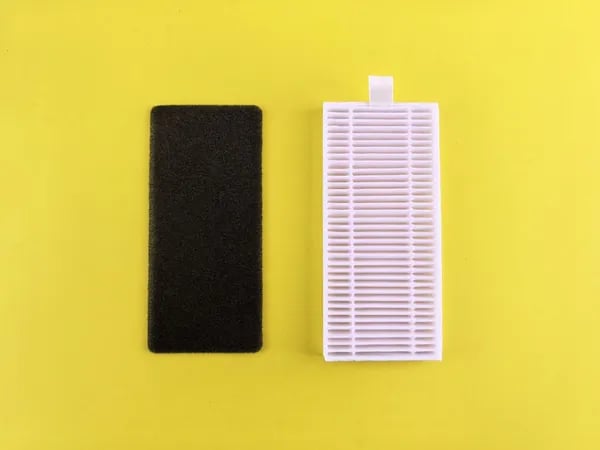
When I shop for Medify replacement filters, I focus on the Three Layers design because it explains why these units (like MA-25, MA-45, and MA-50) can handle both particles and smells. Medify’s system is a simple 3-in-1 stack: a Pre-Filter, True HEPA media (usually HEPA H13 Filters, and H14 on some models), and an activated carbon composite layer.
Layer 1: Pre-Filter (the “big stuff” catcher)
The Pre-Filter is the first line of defense. It grabs larger debris like dust clumps, lint, and pet hair before they reach the HEPA layer. That matters because less buildup on the HEPA media usually means steadier airflow and a longer usable life.
Layer 2: True HEPA H13 (or H14) for fine particles
This is the core of Medify’s HEPA Filters performance. A properly designed True HEPA H13 filter is commonly tested to capture 99.97% of particles at 0.3 microns. Medify also states that select models can filter down to 0.1 microns, but real results still depend on airflow, room size, and how loaded the filter is.
Some testing references mention MERV 17-level performance. To me, that suggests dense filter media and strong capture efficiency for small airborne particles like pollen, smoke particles, and many allergens.
Layer 3: Activated carbon composite for odors and VOCs
The carbon layer targets odors (pets, cooking, smoke) and helps reduce some VOCs through adsorption. It won’t “erase” every smell instantly, but it’s the layer that makes the air feel less stale.
Dr. Emily Hart, Indoor Air Quality Specialist: "A properly designed True HEPA H13 filter paired with carbon adsorption handles both particulates and odors, which is the winning combo for home air."
How I stretch filter life (especially with washable pre-filters)
On models with washable pre-filters (like MA-112), I rinse and fully dry them to reduce running costs.
I lightly vacuum the pre-filter area every 1–2 weeks.
I rotate placement/use when possible so one unit isn’t always doing the “dirtiest” room.
2) Models, Compatibility & Fit (MA-50, MA-45, MA-112, MA-25, MA-22 and more)
I dug into the most common Medify units people actually own—MA-50, MA-45, MA-25, MA-112, plus MA-125, MA-22, MA-40, and MA-15—because compatibility is where most filter mistakes happen. In general, Medify’s 3-in-1 design (pre-filter + HEPA H13/H14 + activated carbon) is consistent across models, but the frame size and seal are not.
MA-50 Filter & MA-45: engineered for everyday pollutants
The MA-50 Filter and MA-45 replacements are built to target common household issues like dust, pollen, smoke, pet dander, and odors. The genuine MA-50 replacement is often listed around $70.99, and I see bulk “filter set” options (including large multi-packs) marketed for routine maintenance.
MA-112 Model: Replacement Filter set details
The MA-112 Model stands out because listings often describe a Replacement Filter set that includes 2 HEPA H13 filters and 2 activated carbon filters, plus notes about washable pre-filters. Some product pages also mention up to 3000 hours and even a lifetime warranty in the listing details (always double-check what applies to the filter vs. the unit).
MA-25 Replacement, MA-22, MA-40, MA-15: fit comes first
For smaller units like MA-25 Replacement and MA-22 (and mid-size MA-40/MA-15), I pay extra attention to the exact model name on the purifier label. Third-party “compatible” filters can be cheaper, but I’ve had mixed results.
Michael Thornton, HVAC Engineer: "Fit and seal are as important as the filter media — a slightly warped or ill-fitting filter can halve real-world performance."
Compatibility notes I follow (after one bad return)
I once tried a cheap compatible filter and had to return it because it rattled; the genuine Medify fit was snug and quiet.
Some reviews mention newer genuine filters being slightly larger, but still compatible—follow the install steps closely.
Many units beep when the filter is seated correctly; I listen for that confirmation before closing everything up.
When in doubt, I choose genuine filters for performance and device safety.
3) Performance, Certifications & Test Claims (True HEPA, Energy Star, CARB, AHAM)
True HEPA performance: what the numbers really mean
Most Medify replacement HEPA Filters I see listed for models like the MA-22, MA-40, and MA-50 use True HEPA H13 (and H14 in some versions). In lab-style testing, True HEPA is commonly described as capturing 99.97% of Airborne Particles at 0.3 microns. Medify also advertises that some filters can capture particles down to 0.1 microns. I treat that “down to” claim as a best-case statement—real homes have changing airflow, humidity, and dust load, which can affect results.
Activated Carbon Filters: odors vs. particles
The 3-in-1 design (pre-filter + HEPA + Activated Carbon Filters) matters because carbon targets smells and gases, not just particles. In my experience, this is why these filters can help with smoke, pet odors, and cooking smells, while the HEPA layer focuses on fine dust, pollen, and dander.
Certifications to look for (as shown in listings in 2023)
On product pages and packaging, I look for these certifications because they add outside checks beyond marketing claims:
Energy Star: suggests the purifier system is designed for energy-efficient operation.
ETL: indicates electrical safety testing/compliance for the device system.
AHAM: ties to CADR testing, which helps estimate real-world cleaning speed.
CARB Standards: important for California buyers and anyone concerned about indoor ozone.
Laura Chen, Environmental Health Researcher: "Certifications like CARB and AHAM add a layer of verification that manufacturer claims live up to safety and performance standards."
Why CARB and AHAM matter in real rooms
CARB Standards are a practical signal that the purifier is designed to keep ozone emissions low. AHAM CADR ratings help me match airflow to room size—because even the best filter can’t clean fast if the purifier’s airflow is too low for the space.
A quick personal tangent on “uncertified” trade-offs
I once tried an uncertified replacement filter and noticed an odd smell after a few days. It still “fit,” but it made me more careful about checking listings for ETL/AHAM/CARB notes and sticking with compatible, verified options.
4) Lifespan & Maintenance: How Long These Filters Really Last (2500–3000 Hours)
What “2500–3000 Hours” looks like in real life
Most Medify Replacement Air Filter sets are designed to run about 2,500 hours, which usually equals 3–4 months in typical home use. For example, the MA-25 is commonly listed around that 2,500-hour mark while still targeting particles down to 0.1 microns with its Three Layers (pre-filter, HEPA H13/H14, and activated carbon). Some models and listings—especially MA-50 and MA-112—are sometimes rated up to 3000 Hours depending on settings and air conditions.
Maintenance that actually helps (without overthinking it)
I treat the filter system like a simple routine: keep the first layer clean so the HEPA doesn’t clog early, and replace the full cartridge when airflow drops or the indicator says it’s time.
Pre-filter care: If your unit has Washable Pre-Filters, rinse and fully dry them. If it’s not washable, I vacuum it gently every 1–2 weeks.
Carbon layer reality: Activated carbon helps with odors, but it can “fill up” faster in kitchens, litter areas, or smoke-prone rooms—sometimes before the HEPA media is truly done.
Full swap timing: If you notice more dust, lingering smells, or weaker airflow, I replace earlier than the hour estimate.
When 3–4 months becomes 6–10 weeks
Sofia Martinez, Consumer Product Tester: "Users often underestimate how indoor conditions shorten filter life — three months can fly by if you have pets or a smoker in the house."
In heavy pet homes, wildfire season, or any smoky environment, I plan for a shorter cycle. Those conditions load the pre-filter fast, and the HEPA works harder, so 2,500 hours can feel optimistic.
Tracking hours (and avoiding guesswork)
Many Medify purifiers include a change indicator or runtime tracking. I still set a calendar reminder based on my usage (high speed vs. low speed). If you want a simple note, I use:
Replace window: 2500 Hours (typical) | 3000 Hours (some models)
Cost-saving moves I’ve seen work
Buy multi-packs when pricing is better.
Use Washable Pre-Filters (when included) to extend HEPA life.
Check MA-112 “lifetime warranty” claims on listings and read the fine print before relying on it.

5) Pricing, Packs & Where to Buy (Amazon Notes: Prices, Prime, Delivery)
Price range snapshot (what I actually see online)
Medify Replacement Air Filter pricing depends on the model and whether you’re buying genuine or compatible. In my shopping, smaller compatible replacements often start around $26.99. A genuine MA-50 Filters option (the MA-50 Genuine Replacement Filter) is commonly listed around $70.99. Larger units can jump a lot—one MA-112 Model listing I noted showed $186.95, discounted to $160.78 in that specific offer.
Example item | Typical price seen |
|---|---|
Smaller compatible Replacement Filter | $26.99 (approx.) |
MA-50 Genuine Replacement Filter | $70.99 |
MA-112 Model Replacement Filter | $186.95 (or $160.78 discounted) |
Packs, multi-packs, and “Filter Set” options
If you replace on schedule (often every 3–4 months, depending on use), packs matter. I see single filters, 2-packs, and multi-filter Filter Set bundles. For heavy users (pets, smoke, clinics, offices), bulk options like a 50-pack show up as a “maintenance” favorite because it reduces reordering and can lower the per-filter cost.
Small packs: good for testing fit and performance.
Multi-pack Filter Set: fewer orders, easier planning.
50-pack: best for facilities or multiple units.
Amazon notes: new/used, Prime, and delivery timing
On Amazon, I regularly see listings for new and used filters, plus Prime and non-Prime checkout options. Delivery can be fast; one common example shown on listings was delivery by Feb 17, 2024 (often earlier with Prime, depending on location and stock). I also watch for model numbers and dimensions—some reviewers mention newer filters can be slightly larger but still compatible when installed correctly (some units even “beep” when seated right).
Value: why people still pay more
Across hundreds of reviews, Medify replacements often average about 4.7 stars. Some buyers say genuine filters cost more and may need more frequent replacement than cheaper brands, but they still prefer the performance. As Rachel Nguyen, Consumer Electronics Shopper, put it:
"I’m willing to pay a bit more for a filter that actually reduces my family's sneezing and pet smells—it's worth it in quality of life."
My buying tip (and what I did)
I weigh upfront cost against capture efficiency: a better Replacement Air Filter can mean less odor, less dust, and sometimes less extra cleaning. I started with a 2-pack, then switched to a 50-pack after six months because the smaller packs made reordering annoying.
6) Real-World Impressions: Reviews, Anecdotes & Common Complaints (I Tried These)
What people (and I) notice most: fewer Airborne Particles
Across hundreds of reviews, Medify’s genuine Replacement Air Filter options average about 4.7 out of 5 stars. The overall mood is consistent: people feel a real drop in dust, pollen, smoke, and other Airborne Particles, especially in homes with pets or allergy issues. Many buyers also mention that odor control improves once the activated carbon layer has a few hours of run time.
Common praise for True HEPA performance (especially with Pet Dander)
Most positive comments focus on the 3-in-1 build (pre-filter + HEPA H13/H14 + carbon). In plain terms, users say the air “feels cleaner,” and surfaces collect less dust. Pet owners frequently call out reduced Pet Dander and less “pet smell” in bedrooms and living rooms.
Karen O'Leary, Longtime Medify User: "Once I switched to genuine Medify filters, the constant sneezing stopped in the bedroom—game changer for our family."
My quick anecdote: a noticeable change in my cat area
When I swapped in a genuine Medify filter, my cat litter room felt noticeably less dusty within two days. I didn’t do anything else differently—same litter, same cleaning schedule—so the change stood out. For me, that’s the best “real-world” proof that the True HEPA layer is doing its job.
Common complaints: price, replacement timing, and fit
Higher cost: Genuine filters can run roughly $26.99–$70.99 depending on model and pack size. People often say it’s pricey, but worth it for performance.
Replacement frequency varies: The typical expectation is 2,500 hours (about 3–4 months), but heavy pets, smoke, or cooking can shorten that.
Subtle size changes: Some newer filters are slightly larger. Most reviewers still confirm compatibility, and installation is usually straightforward—follow the instructions and listen for the unit’s
beepto confirm a proper fit.
One practical tip when buying a Filter Set
Listings often include new and used options, and Prime delivery can be faster. I stick with a genuine Filter Set when allergies are acting up, mainly for consistent fit and filtration.
7) Installation, Fit Tips & Troubleshooting (Beep Means Done)
Quick checklist for installing a Replacement Air Filter (and Pre-Filters)
Power down the purifier and unplug it. I also wait 30 seconds so the sensor resets.
Open the panel and remove the old Replacement Set (pre-filter + HEPA Filters + carbon layer, depending on model).
Wipe the inside with a rag. Dust in the housing can stop a tight seal.
Check arrows/tabs on the new filter. Align them with the slots.
Insert the filter fully. I press evenly around the edges, not just one corner.
Close the panel firmly, then plug in and power on.
Listen for the beep (on models that support it). That sound is often the “installed correctly” cue.
Tom Alvarez, Retail Tech Specialist: “That beep isn't just satisfying—it's the purifier confirming the seal that ensures filtration efficiency.”
Fit tips when the Filter Material feels “too tight”
Some reviewers mention newer Medify Air filters being slightly larger. In my experience, that usually means you need a more deliberate, even push to seat it. If the door closes and you get the beep, it’s typically compatible and sealed.
Common issues and fast fixes
No beep / panel won’t close: re-check orientation arrows, remove any plastic wrap, and clean debris from the gasket area.
Air leaks around the edge: pull the filter out and reinsert it straight; don’t “angle” it in.
Filter rattles: reseat it. If it still rattles, a thin foam shim can be a temporary fix, but I’d contact Medify support for a proper replacement.
Don’t guess replacement timing
I rely on the purifier’s change indicator and runtime hours (often around 2,500 hours, roughly 3–4 months) instead of judging by color or smell. A dark pre-filter can be normal even when the HEPA Filters still have life left.
Model checks + safety note
Before buying any Replacement Air Filter, I match the model number (MA-50, MA-45, etc.) and listed dimensions. If the manufacturer warns against third-party filters, I stick with genuine parts to protect performance, safety certifications, and warranty coverage.
8) Which Medify Filter Is Right for You? (Allergies, Pets, Office, Medical Use)
I pick a Medify Replacement Air Filter based on what I’m trying to remove (allergens, odors, or heavy daily dust) and how hard the purifier will run. Most Medify options use a 3-in-1 build: pre-filter + True HEPA (often HEPA H13 Filters, sometimes H14) + activated carbon for smells.
For allergies or asthma: prioritize True HEPA H13/H14
If sneezing, itchy eyes, or asthma triggers are the main issue, I stick with certified True HEPA models like MA-22, MA-25, and MA-50 Filters. These are designed to capture very small particles (down to 0.1 microns in Medify’s specs) and are commonly recommended for allergy-focused homes.
Dr. Ana Rodriguez, Allergist: "For allergy patients, the right filter can reduce symptoms dramatically — choose a certified True HEPA model and follow replacement schedules."
For pets: carbon matters as much as HEPA
With cats or dogs, I want both dander capture and odor control. I look for a strong carbon layer and plan on more frequent changes, especially in shedding season. MA-22, MA-25, and MA-50 Filters are solid picks here, but I budget for replacements every ~2,500 hours (often 3–4 months) depending on use.
For offices: match CADR and room size
In an office, I check the purifier’s recommended room size and CADR (often listed with AHAM certification). A filter that’s “too small” for the space won’t keep up, even if it’s a great HEPA H13 Filters design.
For medical or compliance-focused spaces: choose certified sets
For heavier-duty, maintenance-heavy environments, I lean toward MA-112/MA-125 options. These often come as a Filter Set (HEPA + carbon) and are better suited when documented performance and certifications (AHAM/ETL/CARB, where applicable) matter.
Budget note: genuine vs compatible
Compatible filters can save money short-term, but may reduce performance or lifespan.
I usually test one genuine filter first, then buy multi-packs if the results are worth it.
9) Wild Cards: Analogies, What-Ifs & A Couple of Surprising Facts
Activated Carbon Filters as the “coffee filter for smells”
When I explain Medify’s 3-in-1 setup to friends, I use a simple picture: Activated Carbon Filters are like a coffee filter for odors. The True HEPA layer catches tiny Airborne Particles (dust, pollen, smoke bits), but the carbon layer “soaks up” what the HEPA doesn’t—those lingering cooking smells, pet odors, and that stale-room funk.
What if you lived next to a fire zone?
Here’s the practical “what-if” I wish more people considered: if you’re in heavy smoke or wildfire season, your Replacement Air Filter schedule can change fast. I’d plan on 50–100% more frequent replacements in high-pollutant conditions. The same goes for heavy pets and lots of Pet Dander—filters load up quicker, airflow drops, and the purifier has to work harder. In those months, I keep at least one spare filter on hand so I’m not stuck waiting on shipping.
Dr. Emily Hart, Indoor Air Quality Specialist: “Filters are a compromise between airflow and capture efficiency—treat them like consumables you plan for, not permanent fixes.”
Surprising fact: washable pre-filters and lifetime warranty mentions (model-specific)
One unexpected detail I’ve seen in some MA-112 parts listings is mention of washable pre-filters and even a lifetime warranty. That’s not universal across models, so I always verify it on the exact product page before I buy. Still, it’s a good reminder that Medify’s lineup isn’t one-size-fits-all.
The “fits” trap: tap shoes for ballet
Sometimes the cheapest third-party filter will physically fit your unit, but quietly underperform. To me, that’s like buying tap shoes for ballet practice: you can put them on, but the results won’t match the goal—especially if you’re trying to reduce allergens or smoke.
A tiny city gate mental model (and my odd habit)
I picture the filter as a small city gate: the pre-filter is the outer gate catching big debris, the True HEPA is the city wall stopping fine particles, and the carbon layer is the customs desk dealing with smells. And yes, I keep a spare in the laundry room labeled with the install date. Strange habit, but it keeps my air (and my schedule) under control.
